


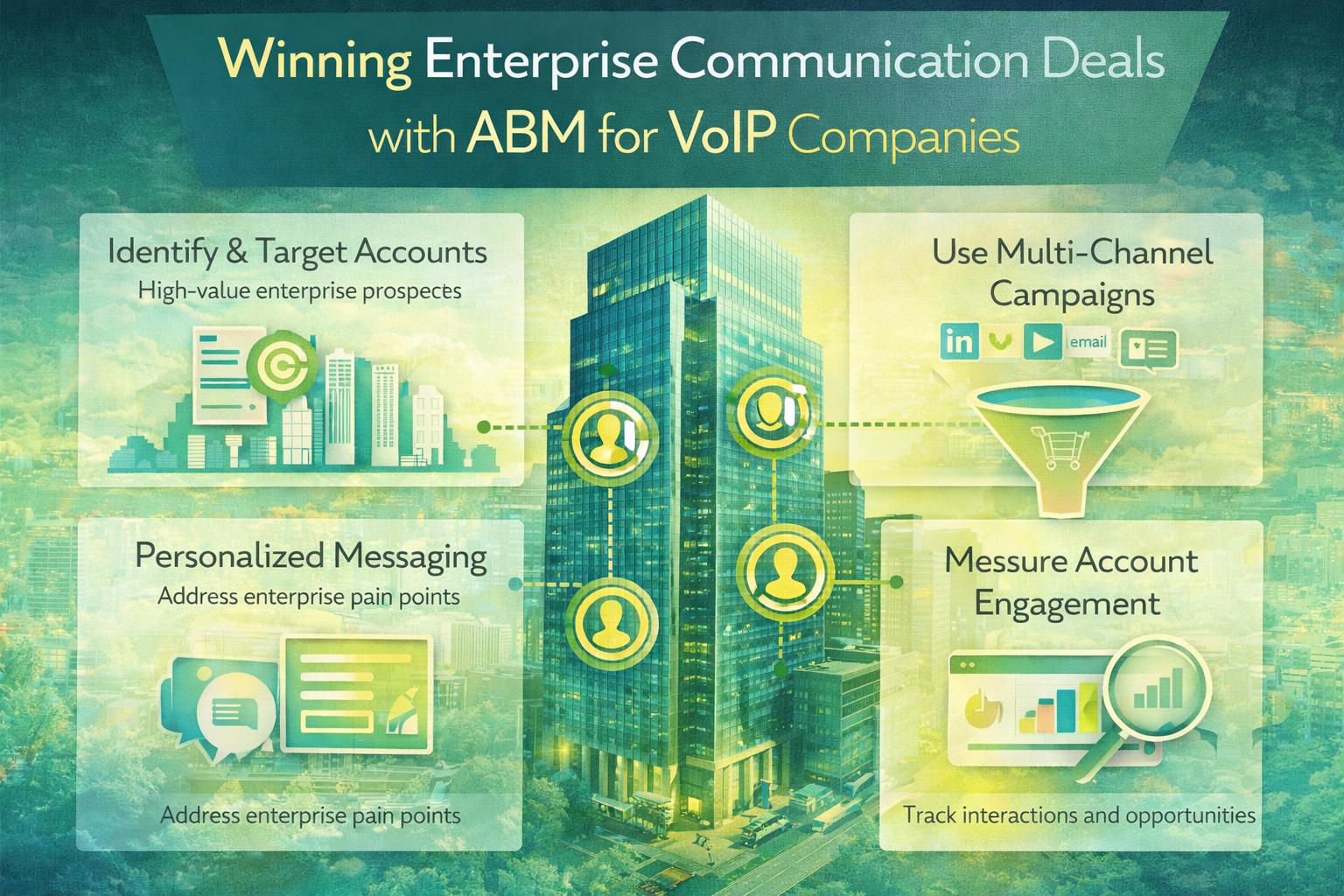
Closing enterprise communication deals is one of the most challenging—and rewarding—opportunities for VoIP companies. Unlike SMB sales, enterprise deals involve longer sales cycles, multiple stakeholders, and higher expectations around scalability, security, and integration.
To win in this space, a broad marketing approach isn’t enough. Success requires precision, personalization, and alignment—this is where Account-Based Marketing (ABM) becomes essential.
Why Enterprise VoIP Deals Require a Different Approach
Enterprise buyers are not just looking for a communication tool—they’re evaluating a long-term strategic solution.
Key characteristics of enterprise buying:
- Multiple decision-makers (IT, finance, operations)
- Complex evaluation processes
- High emphasis on ROI, security, and integrations
- Longer sales cycles
Traditional lead generation often fails here because it lacks focus and personalization.
What Is ABM and Why It Works for VoIP Companies
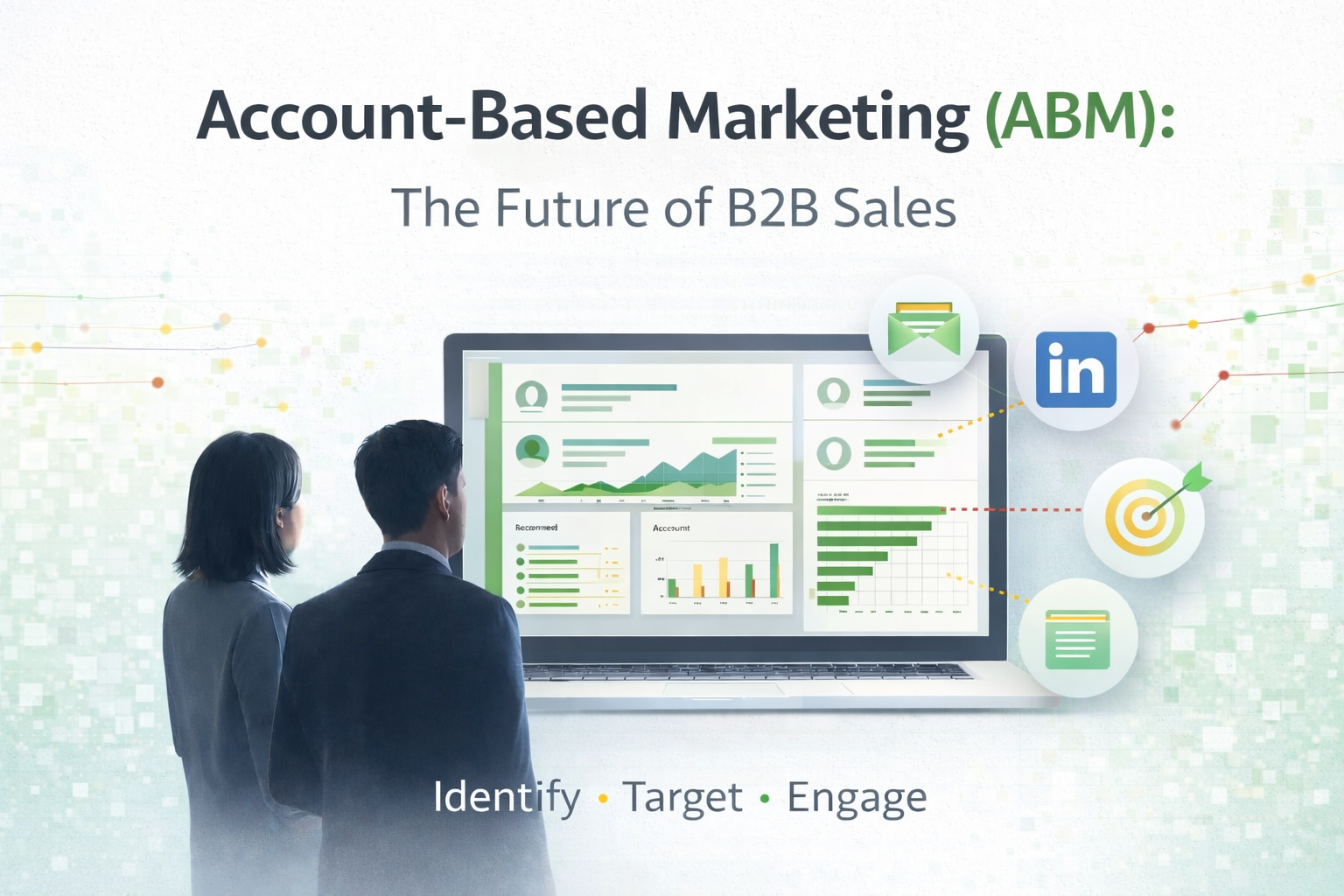
Account-Based Marketing (ABM) is a strategy that focuses on targeting specific high-value accounts rather than broad audiences.
Instead of generating large volumes of leads, ABM prioritizes:
- Quality over quantity
- Personalized engagement
- Alignment between marketing and sales
For VoIP companies, this approach is particularly effective for enterprise deals where each account represents significant revenue potential.
1. Identify and Prioritize High-Value Target Accounts
The foundation of ABM is selecting the right accounts.
Focus on organizations that:
- Have distributed or remote teams
- Are undergoing digital transformation
- Rely heavily on communication infrastructure
- Use outdated or legacy systems
Use firmographic and technographic data to build a list of accounts with the highest likelihood to convert.
2. Map Key Stakeholders Within Each Account
Enterprise deals involve multiple stakeholders, including:
- CIOs and IT Directors
- Network and Infrastructure Managers
- Procurement and Finance teams
Each stakeholder has different priorities:
- IT focuses on performance and integration
- Finance focuses on cost and ROI
- Operations focus on efficiency and scalability
Understanding these roles allows you to tailor messaging effectively.
3. Personalize Messaging for Enterprise Pain Points
Generic messaging won’t resonate with enterprise buyers.
Your communication should address:
- Scalability across global teams
- Integration with existing tech stacks
- Security and compliance requirements
- Cost optimization and ROI
Personalization can include:
- Industry-specific use cases
- Custom value propositions
- Relevant case studies
This makes your outreach more relevant and impactful.
4. Use Multi-Channel ABM Campaigns
ABM is most effective when executed across multiple channels.
Key channels include:
- LinkedIn for targeted advertising and engagement
- Email for personalized outreach and nurturing
- Content syndication for reaching decision-makers at scale
- Retargeting to stay visible throughout the buying journey
A coordinated multi-channel approach ensures consistent messaging across touchpoints.
5. Leverage Intent Data to Time Your Outreach
Timing plays a crucial role in enterprise sales.
Intent data helps identify when target accounts are:
- Researching VoIP or cloud telephony solutions
- Comparing vendors
- Exploring migration options
Engaging accounts during this phase increases the likelihood of meaningful conversations and faster conversions.
6. Deliver High-Value Content for Enterprise Buyers
Enterprise decision-makers require detailed, data-backed information.
Content that supports enterprise deals includes:
- Case studies showcasing large-scale deployments
- ROI and cost-saving analyses
- Technical documentation and integration details
- Industry-specific solution guides
This helps build credibility and supports internal decision-making processes.
7. Align Sales and Marketing for Account-Level Success
ABM requires close collaboration between sales and marketing teams.
This includes:
- Sharing account insights and engagement data
- Coordinating outreach strategies
- Personalizing follow-ups based on interactions
When both teams work together, engagement becomes more consistent and effective.
8. Measure ABM Success at the Account Level
Unlike traditional campaigns, ABM success is measured differently.
Key metrics include:
- Account engagement levels
- Number of stakeholders reached
- Meetings and opportunities generated
- Deal size and pipeline contribution
Focusing on account-level performance provides a clearer picture of ROI.
Conclusion
Winning enterprise communication deals requires a focused and strategic approach. Account-Based Marketing enables VoIP companies to engage high-value accounts with precision, relevance, and timing.
By combining targeted account selection, personalized messaging, and multi-channel execution, businesses can build stronger relationships and close larger deals more efficiently.
In the enterprise VoIP space, success isn’t about reaching more companies—it’s about engaging the right companies in the right way.