


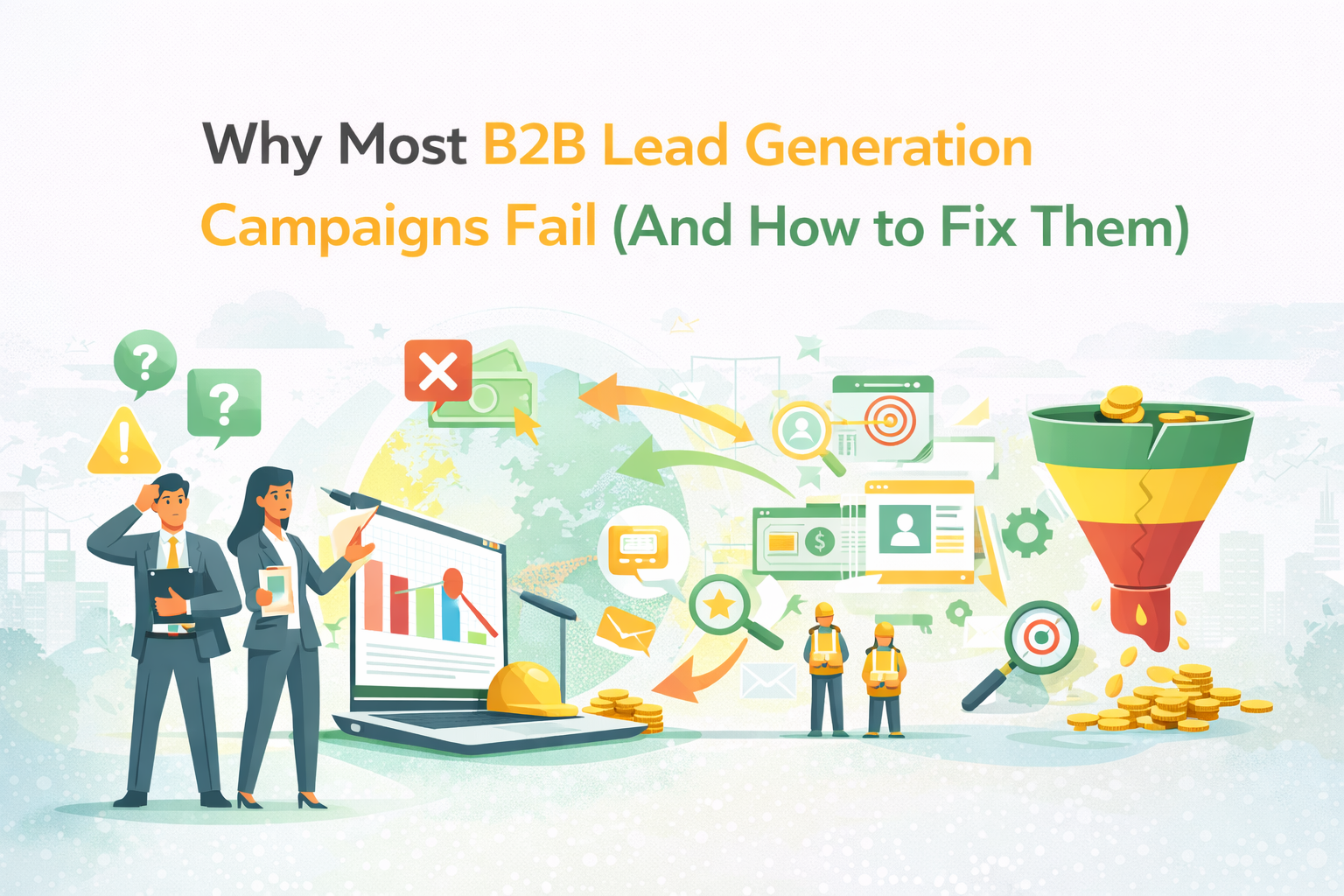
B2B lead generation is one of the most critical drivers of business growth. Yet, many organizations struggle to achieve consistent results from their campaigns. Despite investing heavily in marketing tools, advertising, and outreach strategies, a large percentage of B2B lead generation campaigns fail to deliver high-quality opportunities.
The problem isn’t always the effort — it’s often the strategy, targeting, and execution behind the campaign. Understanding why campaigns fail is the first step toward building a more effective lead generation engine.
In this guide, we’ll explore the most common reasons B2B lead generation campaigns fail and how businesses can fix them to create stronger pipelines.
What Is B2B Lead Generation?
B2B lead generation is the process of identifying and attracting potential business customers who may be interested in your products or services. These leads are then nurtured and qualified until they become sales opportunities.
Successful lead generation involves multiple marketing and sales activities such as:
- Content marketing
- Email outreach
- Social media marketing
- Paid advertising
- Webinars and events
- Account-based marketing (ABM)
However, without the right strategy, these efforts may fail to produce meaningful results.
Why Most B2B Lead Generation Campaigns Fail
1. Poor Target Audience Definition
One of the biggest reasons campaigns fail is targeting the wrong audience. If businesses do not clearly define their Ideal Customer Profile (ICP), marketing efforts may attract prospects who have no real need for the solution.marketing efforts may attr
Without proper targeting, even well-designed campaigns can generate low-quality leads.
2. Focusing on Quantity Instead of Quality
Many organizations prioritize generating large numbers of leads rather than focusing on qualified prospects. This often results in sales teams receiving contacts that are not ready to buy or lack decision-making authority.
Quality leads are far more valuable than high lead volume.
3. Lack of Alignment Between Marketing and Sales
When marketing and sales teams operate independently, lead generation efforts often break down. Marketing may generate leads that sales teams consider unqualified or irrelevant.
Strong collaboration ensures that both teams work toward the same revenue goals.
4. Weak Value Proposition
If your messaging does not clearly communicate the value of your product or service, potential customers may ignore your outreach.
A strong value proposition should clearly explain:
- The problem your solution solves
- The benefits customers will gain
- Why your offering is different from competitors
Without this clarity, campaigns struggle to capture attention.
5. Ineffective Lead Nurturing
Not all prospects are ready to buy immediately. Businesses that fail to nurture leads with relevant content and follow-up communication often lose potential opportunities.
Lead nurturing keeps prospects engaged and guides them through the buying journey.
6. Overreliance on a Single Channel
Some organizations rely heavily on one channel — such as cold email or paid ads — for lead generation. This limits reach and increases campaign risk.
Successful campaigns typically combine multiple channels, including:
- Content marketing
- LinkedIn outreach
- SEO
- Email campaigns
- Webinars and events
A multi-channel strategy improves visibility and engagement.
7. Lack of Data and Performance Tracking
Without proper analytics, businesses cannot identify which strategies are working and which are failing.
Tracking key metrics such as conversion rates, cost per lead, and campaign ROI helps marketers optimize performance.
How to Fix Failing B2B Lead Generation Campaigns
Define a Clear Ideal Customer Profile
Start by identifying the types of companies most likely to benefit from your solution. Focus on industries, company sizes, and roles that match your best customers.
Align Sales and Marketing Teams
Regular communication between sales and marketing ensures that campaigns target the right prospects and deliver qualified leads.
Strengthen Your Messaging
Develop clear, compelling messaging that highlights your solution’s unique value and addresses the pain points of your target audience.
Implement Lead Nurturing Campaigns
Use email marketing, personalized content, and marketing automation to keep prospects engaged until they are ready to buy.
Adopt a Multi-Channel Approach
Combine different lead generation channels to reach prospects at multiple touchpoints and increase engagement.
Use Data to Optimize Campaigns
Analyze campaign performance regularly and refine strategies based on real results.
B2B Lead Generation Trends for 2026
As B2B marketing evolves, several trends are shaping more successful campaigns:
AI-powered lead scoring
Artificial intelligence helps identify high-intent prospects and prioritize outreach.
Intent data-driven targeting
Businesses can target companies actively researching solutions.
Account-Based Marketing (ABM)
Personalized campaigns targeting high-value accounts deliver better results.
Personalization at scale
Modern marketing tools allow companies to deliver tailored messages to specific audiences.marketing tools allo
Who Should Improve Their Lead Generation Strategy?
Businesses that commonly struggle with lead generation include:
- B2B SaaS companies
- Technology service providers
- Consulting firms
- Companies with long or complex sales cycles
These organizations benefit greatly from optimized lead generation strategies.
Conclusion
Many B2B lead generation campaigns fail because they lack clear targeting, strong messaging, and alignment between marketing and sales. However, with the right strategy and continuous optimization, businesses can transform underperforming campaigns into powerful pipeline generators.
By focusing on quality leads, multi-channel engagement, and data-driven decision-making, companies can build a sustainable lead generation engine that drives consistent revenue growth.