


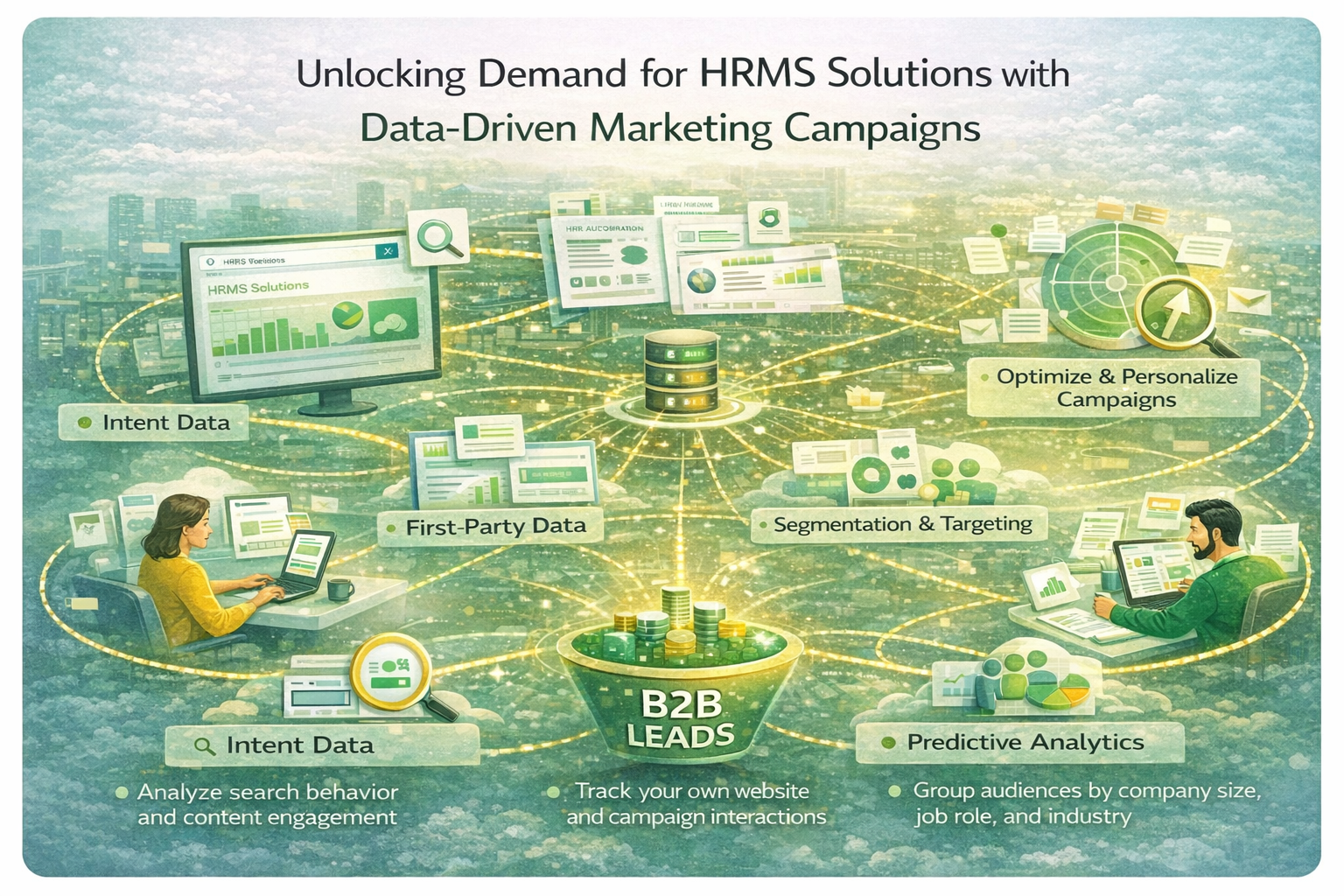
As organizations increasingly invest in digital HR transformation, the demand for HRMS (Human Resource Management Systems) continues to grow. However, with rising competition in the HR tech space, simply launching campaigns is no longer enough.
To generate consistent and high-quality demand, HRMS companies must rely on data-driven marketing campaigns that identify the right audience, deliver relevant messaging, and optimize performance in real time.
Why Data-Driven Marketing Matters in HRMS
HR buyers today are informed and selective. They:
- Research multiple solutions before engaging
- Prioritize ROI, compliance, and employee experience
- Interact across multiple digital touchpoints
Data-driven marketing helps businesses:
- Identify high-intent prospects
- Personalize campaigns based on behavior
- Improve lead quality and conversion rates
- Optimize marketing spend
This approach replaces guesswork with actionable insights.
1. Use Intent Data to Identify HR Buyers in the Market
Intent data reveals which organizations are actively researching HR solutions.
Key signals include:
- Searches like “best HRMS software” or “HR automation tools”
- Engagement with content on payroll, compliance, and employee management
- Visits to comparison, pricing, or demo pages
By targeting these signals, HRMS companies can focus on prospects already in the buying cycle.
2. Leverage First-Party Data for Deeper Insights
First-party data, collected from your own platforms provides valuable visibility into user behavior.
This includes:
- Website engagement (page visits, time spent)
- Content downloads
- Demo requests
Analyzing this data helps:
- Identify high-performing content
- Understand user intent
- Optimize the buyer journey
These insights enable more effective campaign planning.
3. Segment Audiences for Targeted Campaigns
Not all HR buyers have the same needs.
Segmentation allows you to group audiences based on:
- Industry
- Company size
- Job role (CHRO, HR Manager, HR Ops)
- Stage in the buying journey
This enables personalized campaigns that resonate with specific audience segments, improving engagement and lead quality.
4. Optimize Content Strategy Using Data
Content plays a critical role in demand generation.
Use data to identify what topics and formats perform best.
High-performing content areas:
- HR automation and efficiency
- Payroll and compliance management
- Employee experience and engagement
- HR analytics and reporting
Effective formats:
- Blogs and guides
- Case studies with measurable outcomes
- Industry reports
- ROI-driven content
Data-driven content ensures relevance and better visibility.
5. Execute Multi-Channel Campaigns with Unified Insights
HR decision-makers engage across multiple platforms, making a multi-channel approach essential.
Key channels include:
- Search marketing for capturing high-intent traffic
- LinkedIn for targeting HR professionals
- Email marketing for nurturing leads
- Content syndication for expanding reach
Using data across these channels helps maintain consistent messaging and improves campaign effectiveness.
6. Personalize Campaigns Based on Behavior
Behavioral data enables real-time personalization.
For example:
- If a user downloads a compliance guide → share related content on payroll automation
- If a prospect visits pricing pages → offer a demo or consultation
Personalized experiences increase engagement and accelerate decision-making.
7. Implement Predictive Analytics for Better Targeting
Predictive analytics uses historical data to identify patterns and forecast outcomes.
This helps:
- Identify accounts likely to convert
- Improve lead scoring models
- Prioritize high-value prospects
With predictive insights, marketing efforts become more focused and efficient.
8. Continuously Measure and Optimize Campaign Performance
The strength of data-driven marketing lies in continuous improvement.
Key metrics to track:
- Cost per qualified lead (CPL)
- Conversion rates across channels
- Engagement levels
- Pipeline contribution
Regular analysis helps refine targeting, messaging, and channel strategies.
Conclusion
Unlocking demand for HRMS solutions requires more than traditional marketing, it requires a strategic, data-driven approach that focuses on intent, behavior, and personalization.
By leveraging data at every stage, from audience targeting to campaign optimization HRMS companies can attract high-quality prospects and drive meaningful engagement.
In a competitive HR tech market, data is the foundation for building scalable demand and sustainable growth.