



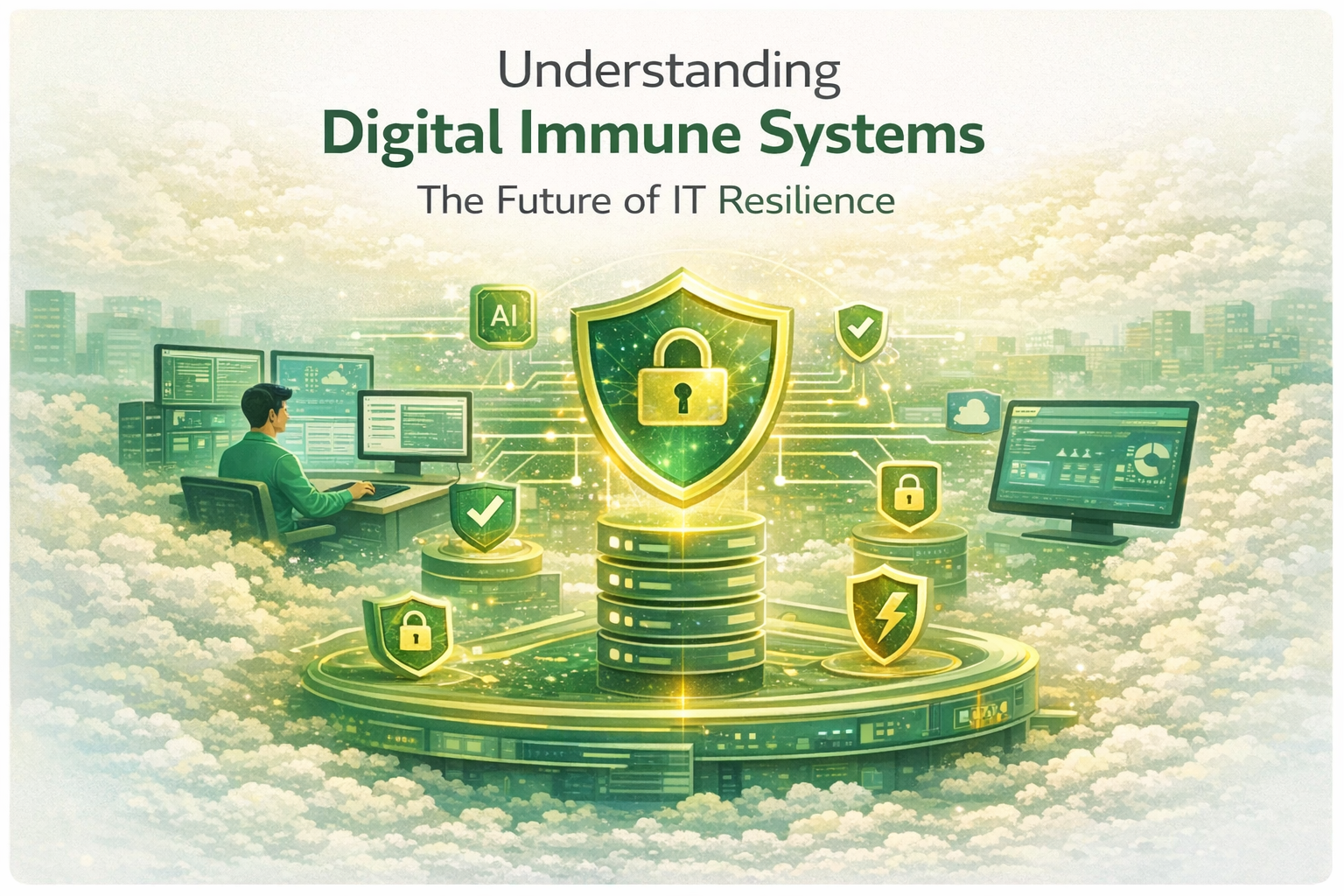
In a digital-first economy, system downtime, security breaches, and performance failures don’t just disrupt operations — they impact revenue, customer trust, and brand reputation. As IT environments become more complex, businesses need a smarter, proactive way to stay resilient.
That’s where Digital Immune Systems (DIS) come in.
Digital immune systems are redefining how organizations protect, optimize, and future-proof their IT infrastructure — turning resilience into a competitive advantage.
What Is a Digital Immune System?
A Digital Immune System is an intelligent, automated framework that continuously monitors, protects, and heals digital systems. Inspired by the human immune system, DIS identifies threats early, responds instantly, and adapts over time to prevent repeat failures.
By combining AI, automation, observability, and embedded security, digital immune systems help businesses move from reactive firefighting to proactive IT operations.
Why Digital Immune Systems Matter for Modern Businesses
Today’s customers expect always-on digital experiences. Even a few minutes of downtime can result in lost leads, reduced conversions, and damaged credibility.
Digital immune systems help organizations:
- Prevent costly outages and disruptions
- Detect cyber threats before they cause damage
- Reduce dependency on manual IT intervention
- Deliver seamless, high-performance digital experiences
Simply put, DIS enables IT teams to do more with less while maintaining reliability at scale.
Key Business Benefits of Digital Immune Systems
1. Minimized Downtime, Maximized Revenue
With predictive monitoring and self-healing capabilities, digital immune systems resolve issues before users are affected — protecting revenue and productivity.
2. Stronger Cybersecurity and Compliance
Security is built into every layer of the system, ensuring continuous threat detection, rapid response, and improved regulatory compliance.
3. Faster Time-to-Market
Automated testing and validation reduce deployment risks, allowing teams to release updates faster without compromising quality.
4. Lower Operational Costs
By automating issue detection and resolution, organizations significantly reduce manual effort, incident management costs, and support overhead.
5. Enhanced Customer Experience
Stable, high-performing systems lead to better user experiences, higher satisfaction, and increased customer retention.
Core Components Powering a Digital Immune System
Intelligent Observability
Real-time insights into system performance help teams spot issues early and make data-driven decisions.
AI-Driven Insights
Machine learning models identify anomalies, predict failures, and recommend corrective actions — before problems escalate.
Automated Self-Healing
From restarting services to reallocating resources, automation ensures rapid response with minimal human intervention.
Security by Design
Continuous vulnerability assessments, zero-trust frameworks, and automated threat response strengthen digital defenses.
Continuous Testing
Every change is validated in real time, reducing bugs, rollbacks, and performance degradation.
Digital Immune Systems: A New Standard for IT Resilience
IT resilience is no longer just about recovery — it’s about prevention and adaptability.
Digital immune systems enable organizations to:
- Anticipate failures
- Respond instantly to disruptions
- Learn and improve continuously
This shift empowers businesses to stay resilient in the face of growing cyber risks, cloud complexity, and customer expectations.
Who Should Invest in Digital Immune Systems?
Digital immune systems are ideal for:
- SaaS and cloud-native companies
- Financial services and fintech firms
- Healthcare and regulated industries
- E-commerce platforms
- Enterprises undergoing digital transformation
Any organization that relies on digital uptime to drive growth can benefit.
The Future of IT Resilience Starts Now
As digital ecosystems evolve, digital immune systems will become a core pillar of modern IT strategy. Businesses that adopt DIS early will gain:
- Greater operational confidence
- Improved system reliability
- Stronger customer trust
- Long-term competitive advantage
Conclusion
Digital immune systems represent the future of secure, resilient, and scalable IT operations. By leveraging AI, automation, and proactive security, organizations can transform IT from a cost center into a growth enabler.
In an era where digital performance defines business success, investing in a digital immune system isn’t just smart — it’s essential.