


Introduction
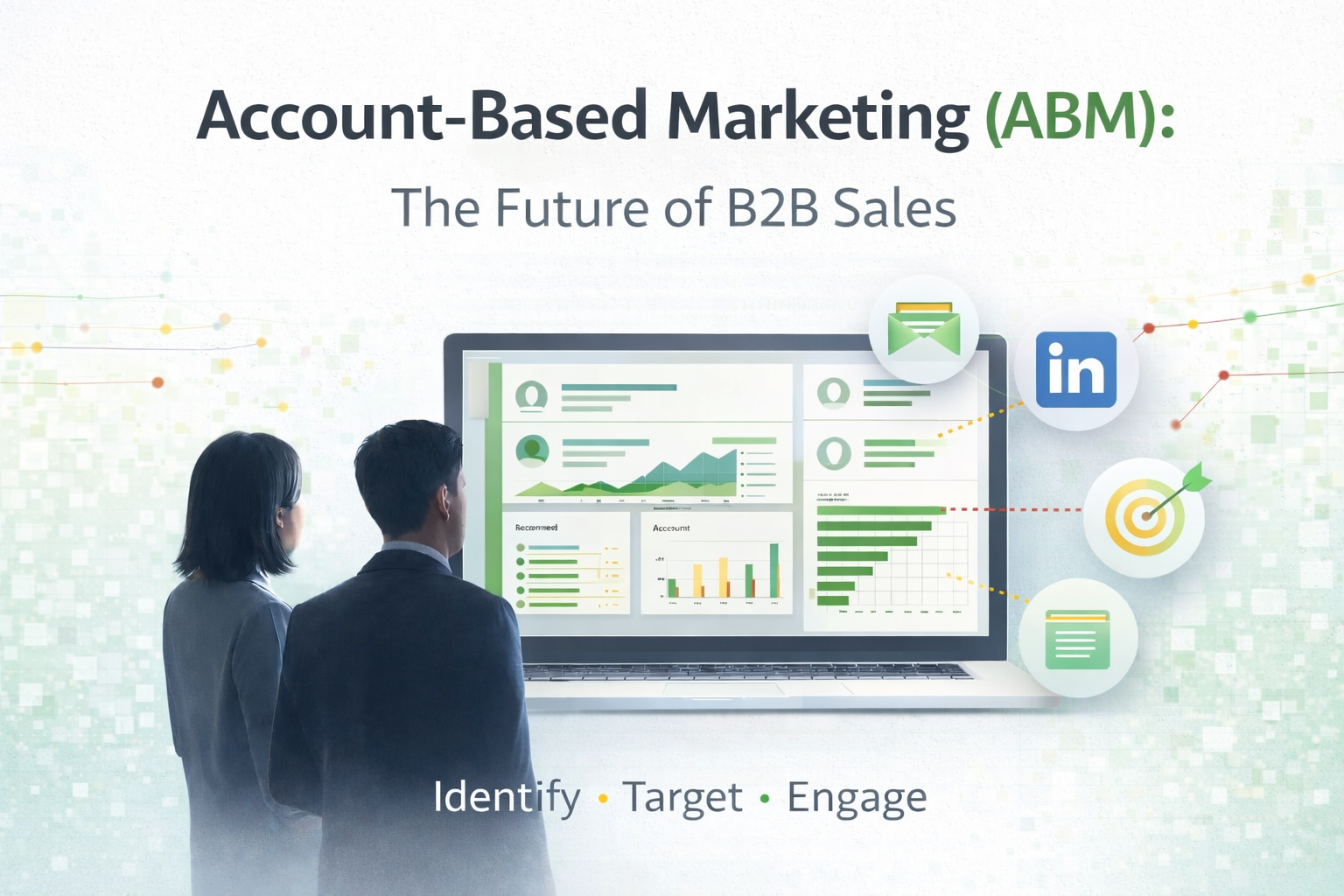
As B2B marketing becomes increasingly targeted and data-driven, Account-Based Marketing (ABM) has emerged as one of the most effective strategies for engaging high-value accounts. Instead of casting a wide net, ABM focuses on precision targeting, personalized engagement, and high-intent opportunities.
For organizations looking to improve lead quality and pipeline efficiency, ABM offers a structured path to success. As a B2B media house working closely with growth-focused companies, we’ve seen how well-executed ABM campaigns can drive stronger engagement, higher conversion rates, and predictable revenue growth.
In this guide, we break down the step-by-step process to launching your first ABM campaign.
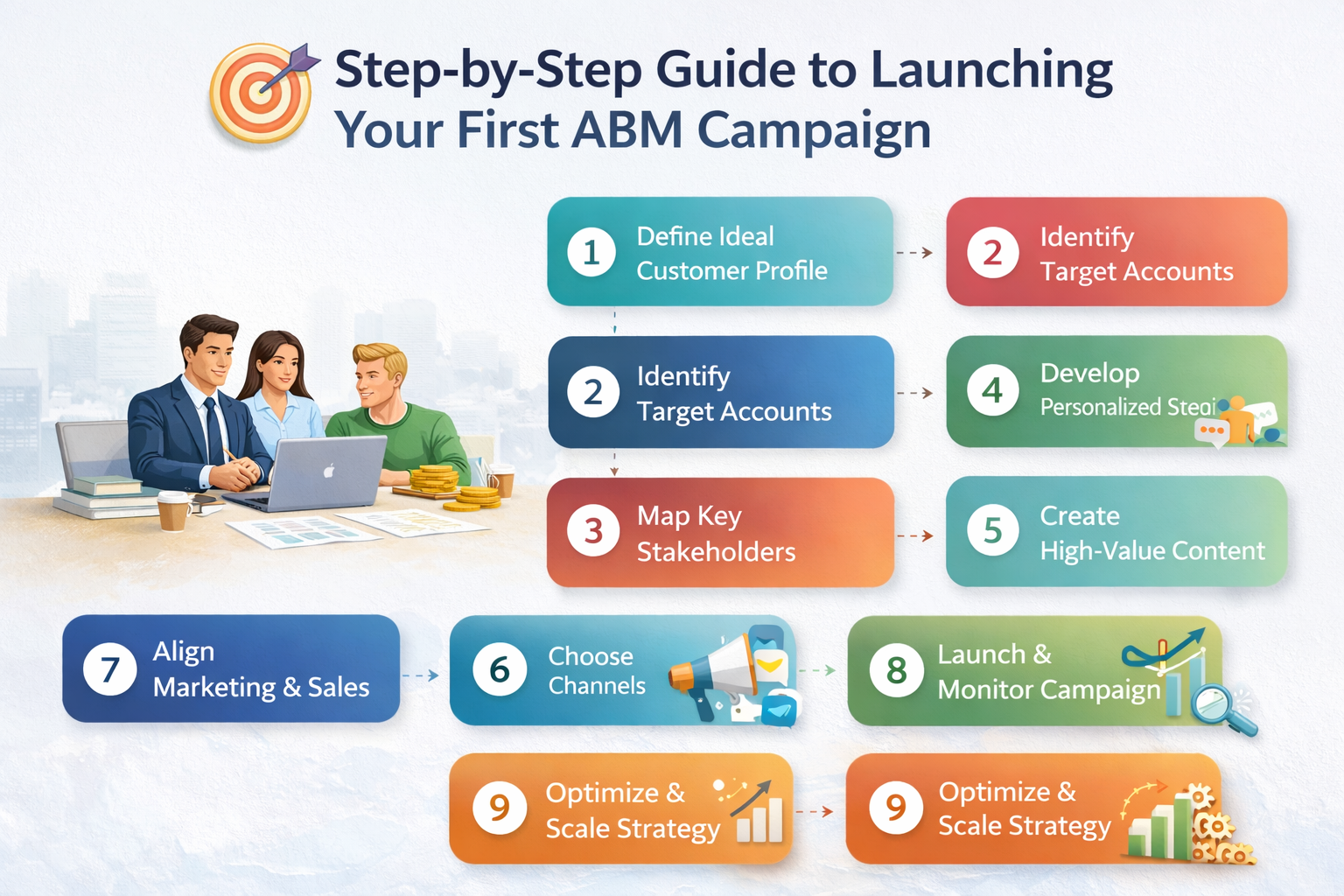
Step 1: Define Your Ideal Customer Profile (ICP)
The foundation of any ABM campaign is a clearly defined Ideal Customer Profile (ICP).
Key Factors to Consider:
- Industry and market segment
- Company size and revenue range
- Decision-maker roles and job titles
- Business challenges and needs
A well-defined ICP ensures that your campaign focuses on accounts with the highest potential value, rather than a broad audience.
Step 2: Identify and Select Target Accounts
Once your ICP is established, the next step is building a list of high-value target accounts.
Selection Criteria:
- Strategic importance of the account
- Likelihood of conversion
- Alignment with your solution
- Engagement signals or intent data
This step shifts your focus from lead generation to account prioritization, which is central to ABM success.
Step 3: Map Key Stakeholders Within Accounts
ABM requires engaging multiple decision-makers within each account.
Typical Stakeholders Include:
- C-level executives
- Department heads
- Operational decision-makers
- Influencers and end-users
Understanding the roles and priorities of each stakeholder helps create more relevant and personalized engagement strategies.
Step 4: Develop Personalized Messaging
Personalization is at the core of ABM.
Instead of generic messaging, campaigns should focus on:
- Addressing specific business challenges
- Aligning with industry context
- Highlighting relevant use cases and outcomes
For B2B media houses, this means crafting messaging that resonates with each account and stakeholder, ensuring higher engagement.
Step 5: Create High-Value Content
Content plays a critical role in supporting ABM campaigns.
Effective Content Types:
- Case studies and success stories
- Industry insights and reports
- Thought leadership articles
- Solution-focused content
This content should be tailored to address the specific needs of target accounts, making it more impactful.
Step 6: Choose the Right Channels
ABM campaigns require a multi-channel approach to engage accounts effectively.
Key Channels:
- LinkedIn – For direct engagement and visibility
- Email Campaigns – For personalized outreach
- Content Syndication – To expand reach within target accounts
- Industry Media Platforms – To build credibility
As a B2B media house, we help distribute content across these channels to ensure consistent engagement with high-value accounts.
Step 7: Align Marketing and Sales Teams
ABM success depends on strong alignment between marketing and sales.
Key Alignment Areas:
- Shared account lists
- Unified messaging and positioning
- Coordinated outreach efforts
- Continuous feedback and optimization
This collaboration ensures a seamless experience for target accounts and improves conversion outcomes.
Step 8: Launch and Monitor Campaign Performance
Once the campaign is live, continuous monitoring is essential.
Key Metrics to Track:
- Account engagement levels
- Content interaction rates
- Pipeline contribution
- Conversion rates
These insights help refine the campaign and improve performance over time.
Step 9: Optimize and Scale Your ABM Strategy
ABM is an iterative process. After initial results, campaigns should be optimized and scaled.
Optimization Strategies:
- Refining target account lists
- Adjusting messaging based on engagement
- Expanding to new high-value accounts
- Leveraging data for better targeting
With the right approach, ABM can evolve into a scalable and repeatable growth strategy.
Conclusion
Launching your first ABM campaign requires a structured approach built on targeting precision, personalization, and strategic execution.
By defining your ICP, selecting the right accounts, aligning messaging, and leveraging multi-channel engagement, businesses can create high-impact campaigns that drive meaningful results.
As a B2B media house, we help organizations design and execute ABM campaigns that deliver high-intent engagement, stronger pipelines, and sustainable growth.