


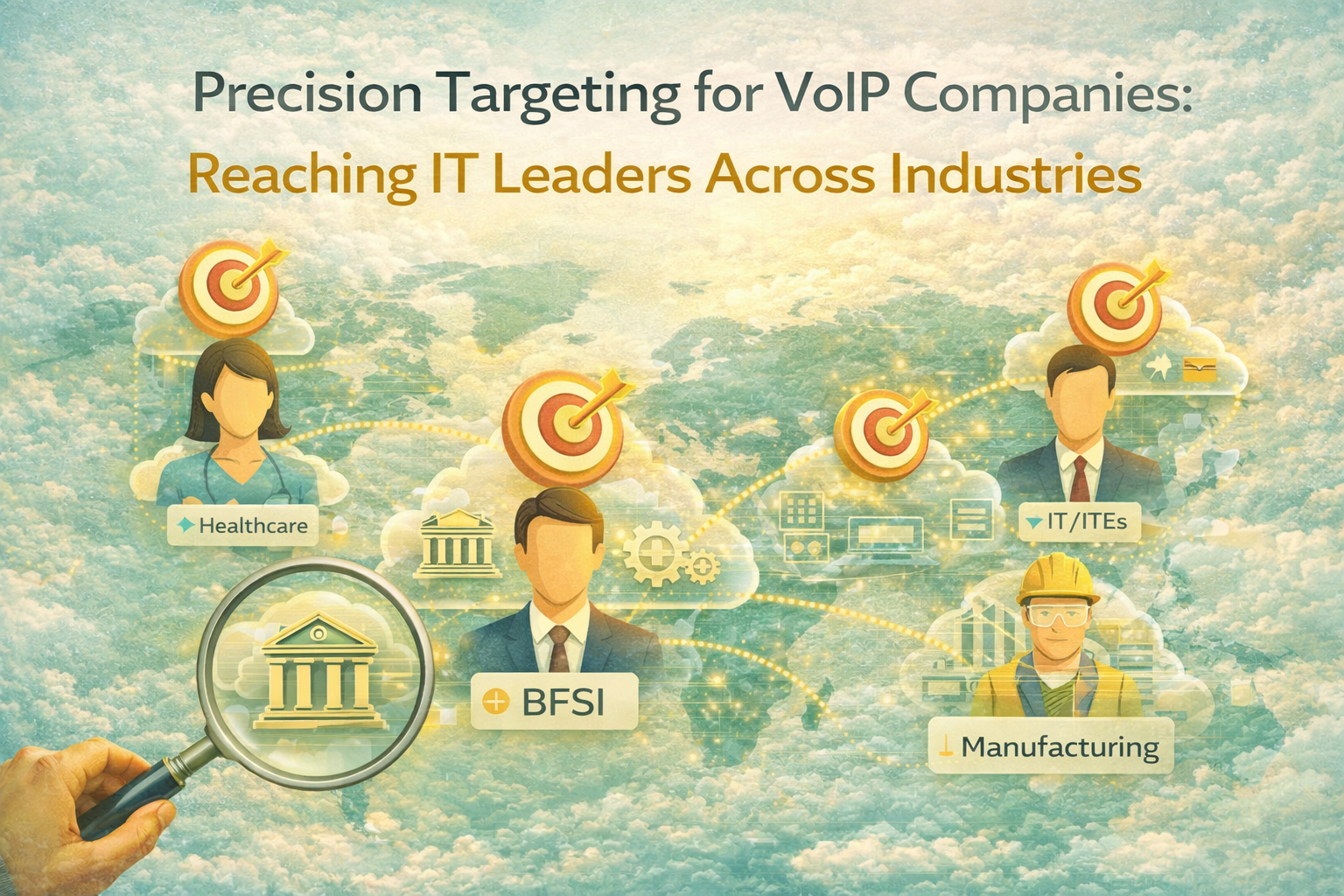
In the evolving VoIP and cloud communication market, reaching the right audience is no longer optional, it’s essential. With increasing competition and longer buying cycles, success depends on how effectively companies can target IT leaders with precision across industries.
Broad, generic campaigns often lead to low engagement and poor-quality leads. To drive meaningful pipeline, VoIP providers must adopt a targeted approach that focuses on relevance, timing, and data.
Why Precision Targeting Matters in VoIP Marketing
IT leaders such as CIOs, IT Heads, and Infrastructure Managers are key decision-makers in communication investments. However, they:
- Receive high volumes of vendor outreach
- Prioritize solutions aligned with business goals
- Engage only with highly relevant messaging
Precision targeting ensures that your marketing efforts:
- Reach the right decision-makers
- Address specific industry challenges
- Improve engagement and conversion rates
Understanding IT Leaders Across Different Industries
Each industry has unique communication needs and challenges.
Examples:
- Healthcare: Compliance, data security, and reliable communication
- BFSI: Secure, scalable, and compliant communication systems
- IT/ITeS: Support for remote teams and global collaboration
- Manufacturing: Operational efficiency and real-time coordination
A one-size-fits-all message won’t resonate. Tailoring your approach by industry increases relevance and impact.
1. Build Detailed Audience Segments
Effective targeting starts with strong segmentation.
Segment your audience based on:
- Industry verticals
- Company size
- Geographic regions
- Job roles and seniority
This allows you to create focused campaigns that speak directly to specific audience groups.
2. Use Intent Data for Smarter Targeting
Intent data helps identify organizations actively researching VoIP or cloud telephony solutions.
Key signals include:
- Searches for “enterprise VoIP solutions”
- Engagement with comparison or pricing content
- Consumption of industry-specific communication resources
By focusing on accounts showing these signals, you can prioritize prospects who are more likely to convert.
3. Personalize Messaging by Industry and Role
IT leaders expect messaging that aligns with their specific challenges.
For example:
- A CIO in BFSI may prioritize security and compliance
- An IT Head in a tech company may focus on scalability and integrations
Your messaging should highlight:
- Relevant use cases
- Industry-specific benefits
- Measurable outcomes
Personalization increases engagement and builds credibility.
4. Leverage Multi-Channel Targeting Strategies
Reaching IT leaders requires visibility across multiple channels.
Key channels include:
- LinkedIn for role-based targeting and engagement
- Search marketing for capturing high-intent traffic
- Email campaigns for direct communication
- Content syndication for expanding reach
A multi-channel approach ensures consistent exposure throughout the buyer journey.
5. Create High-Value, Industry-Specific Content
Content plays a critical role in engaging IT decision-makers.
Focus on:
- Industry-specific case studies
- Technical guides and solution briefs
- ROI-driven insights
- Comparison content
Examples:
- “VoIP solutions for healthcare compliance”
- “Cloud telephony for financial services: security and scalability”
This positions your brand as a relevant solution provider for each industry.
6. Align Sales Outreach with Targeting Strategy
Precision targeting doesn’t stop at marketing—it must extend to sales.
Sales outreach should:
- Reference industry challenges
- Be tailored to the prospect’s role
- Align with recent engagement or intent signals
This creates a seamless and personalized experience for prospects.
7. Use Retargeting to Reinforce Messaging
Not all IT leaders convert immediately.
Retargeting helps:
- Re-engage visitors who showed interest
- Deliver deeper, more relevant content
- Reinforce your value proposition
This keeps your brand top-of-mind during the decision-making process.
8. Measure and Optimize Targeting Effectiveness
To improve results, track metrics that reflect targeting success:
- Engagement rates by industry
- Conversion rates by audience segment
- Cost per qualified lead
- Pipeline contribution
Analyzing these metrics helps refine segmentation and messaging strategies.
Conclusion
Precision targeting is the key to reaching IT leaders effectively in today’s competitive VoIP market. By combining intent data, industry segmentation, and personalized messaging, companies can engage decision-makers with relevance and impact.
A focused, data-driven approach ensures that marketing efforts are not just reaching more people, but reaching the right people who are ready to act.