


Introduction
In today’s B2B landscape, generating leads is only half the battle—the real challenge lies in converting those leads into customers. One of the most critical factors influencing conversion success is the alignment between sales and marketing teams.
When these two functions operate in silos, it often leads to poor lead quality, missed opportunities, and inefficient pipelines. However, when aligned effectively, they create a seamless system that drives higher conversion rates, faster deal cycles, and predictable growth.
As a B2B media house working with growth-focused organizations, we’ve seen how strong sales and marketing alignment can transform lead generation into a high-performing revenue engine.
Why Sales and Marketing Alignment Matters
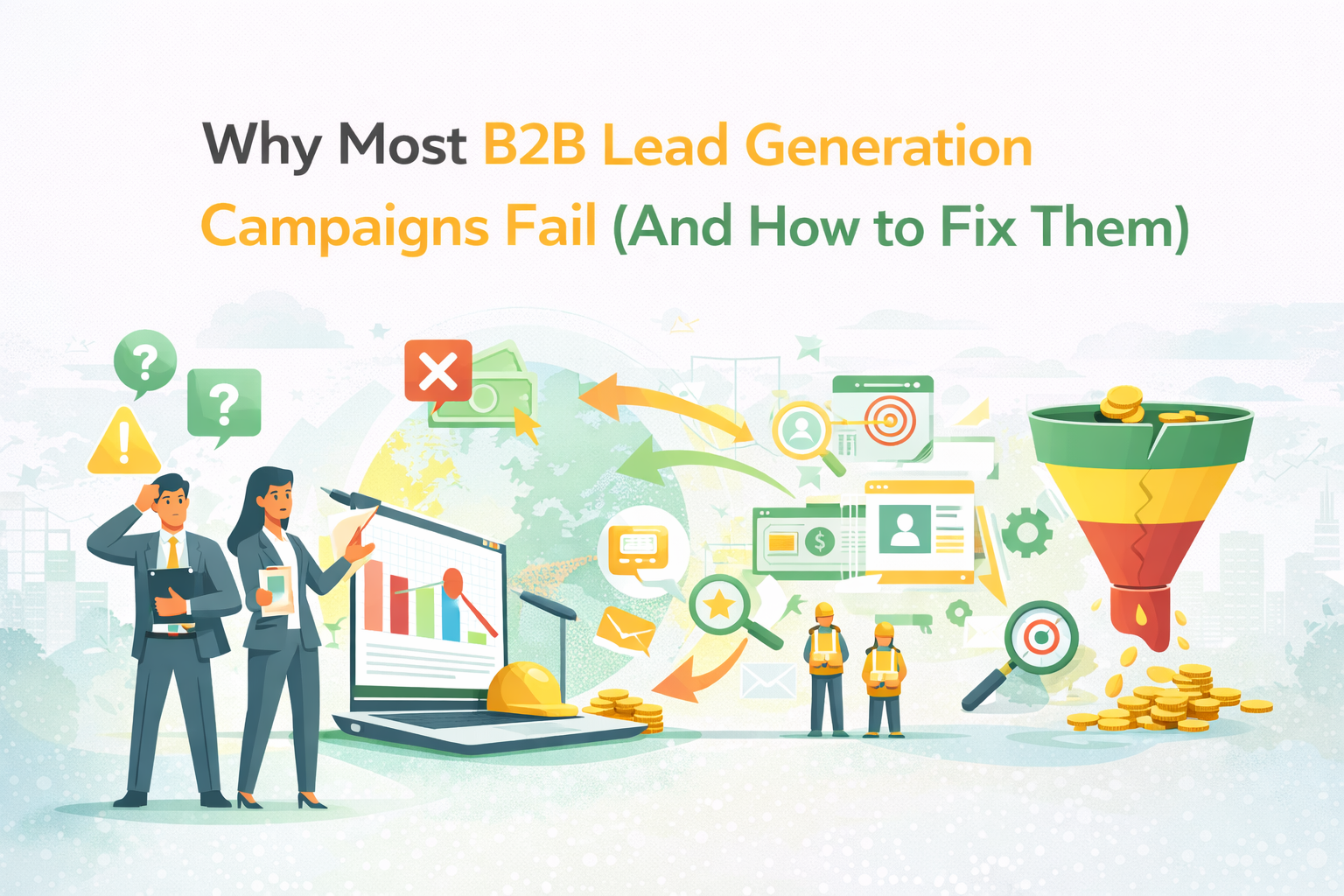
Misalignment between sales and marketing can result in:
- Low-quality leads entering the pipeline
- Delayed follow-ups and missed opportunities
- Inconsistent messaging across touchpoints
- Lack of accountability in conversion outcomes
On the other hand, alignment ensures:
- Better lead qualification
- Consistent buyer experience
- Improved conversion efficiency
- Stronger pipeline performance
For B2B organizations, alignment is not optional—it’s essential for maximizing ROI from lead generation efforts.
Defining a Shared Understanding of the Ideal Customer
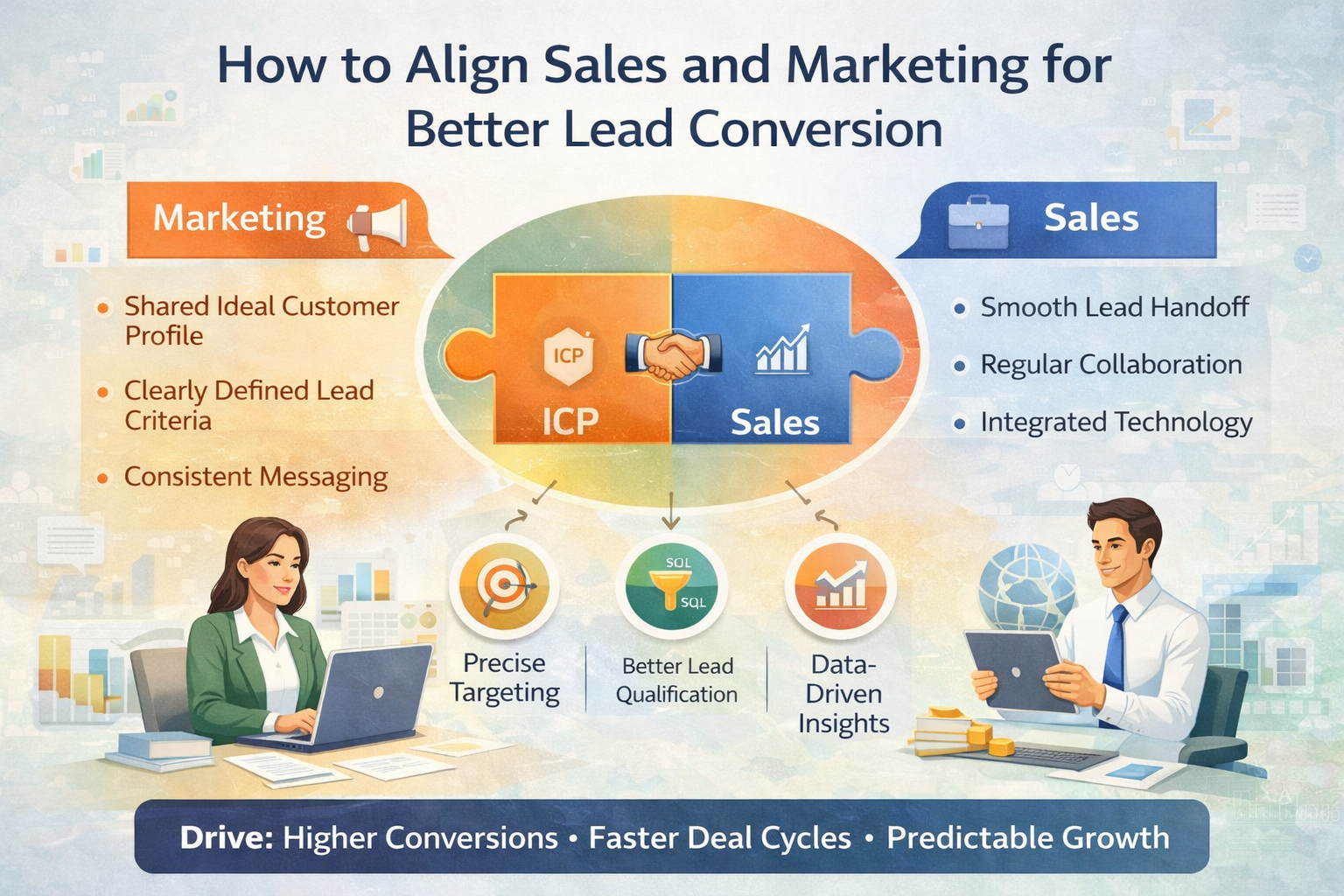
The foundation of alignment begins with a shared definition of the Ideal Customer Profile (ICP).
Both teams must agree on:
- Target industries and segments
- Company size and revenue range
- Key decision-makers and stakeholders
- Core business challenges
This ensures that marketing attracts the right audience, while sales engages with high-potential prospects.
Establishing Clear Lead Qualification Criteria
One of the most common gaps between sales and marketing lies in how leads are defined and qualified.
To address this, organizations must establish:
- Clear definitions of Marketing Qualified Leads (MQLs)
- Criteria for Sales Qualified Leads (SQLs)
- Agreed-upon scoring and prioritization models
This creates a structured process where only relevant and high-intent leads are passed to sales, improving conversion rates.sales, improving conversi
Creating a Seamless Lead Handoff Process
A smooth transition from marketing to sales is critical for maintaining momentum.
Effective lead handoff requires:
- Timely transfer of qualified leads
- Complete context and data about the prospect
- Defined follow-up timelines and responsibilities
When this process is streamlined, prospects experience consistent and relevant engagement, increasing the likelihood of conversion.
Aligning Messaging Across the Buyer Journey
Consistency in messaging is key to building trust and guiding prospects through the funnel.
Both teams should align on:
- Value propositions and positioning
- Key pain points and solutions
- Industry-specific messaging
As a B2B media house, we ensure that messaging remains consistent across content, campaigns, and sales conversations, creating a unified brand experience.
Leveraging Data and Insights for Better Decisions
Data plays a crucial role in aligning sales and marketing efforts.
Key Insights to Share:
- Lead behavior and engagement patterns
- Campaign performance metrics
- Conversion rates across pipeline stages
- Feedback from sales interactions
By sharing these insights, both teams can refine their strategies and focus on what drives conversions.
Implementing Regular Communication and Feedback Loops
Alignment is an ongoing process that requires continuous collaboration.
Best Practices:
- Regular meetings between sales and marketing teams
- Feedback on lead quality and campaign performance
- Joint planning of campaigns and outreach strategies
This ensures that both teams remain aligned and responsive to changing market dynamics.
Integrating Technology for Better Collaboration
Technology plays a key role in enabling alignment.
Essential Tools:
- CRM systems for tracking leads and pipeline
- Marketing automation platforms for campaign management
- Analytics tools for performance tracking
Integrated systems provide a single source of truth, enabling both teams to work more efficiently.
Measuring Success Through Conversion Metrics
To evaluate alignment, organizations should track:
- MQL to SQL conversion rates
- Lead-to-customer conversion rates
- Pipeline velocity
- Revenue contribution from marketing
These metrics provide clear visibility into how alignment impacts business outcomes.
Scaling Alignment for Long-Term Growth
As organizations grow, alignment must evolve into a scalable framework.
This includes:
- Standardizing processes and workflows
- Continuously refining targeting and messaging
- Leveraging automation while maintaining personalization
- Expanding collaboration across teams
With the right approach, sales and marketing alignment becomes a long-term driver of growth and efficiency.
Conclusion
Aligning sales and marketing is one of the most effective ways to improve lead conversion and pipeline performance in B2B organizations.
By establishing shared goals, refining lead qualification, aligning messaging, and leveraging data-driven insights, businesses can create a seamless system that drives higher conversions and faster growth.
As a B2B media house, we help organizations bridge the gap between sales and marketing—enabling them to turn lead generation into a predictable and scalable revenue engine.