


Introduction
In today’s competitive B2B landscape, traditional demand generation strategies are no longer sufficient to capture and convert high-quality leads. Buyers are more informed, research-driven, and selective in their decision-making process.
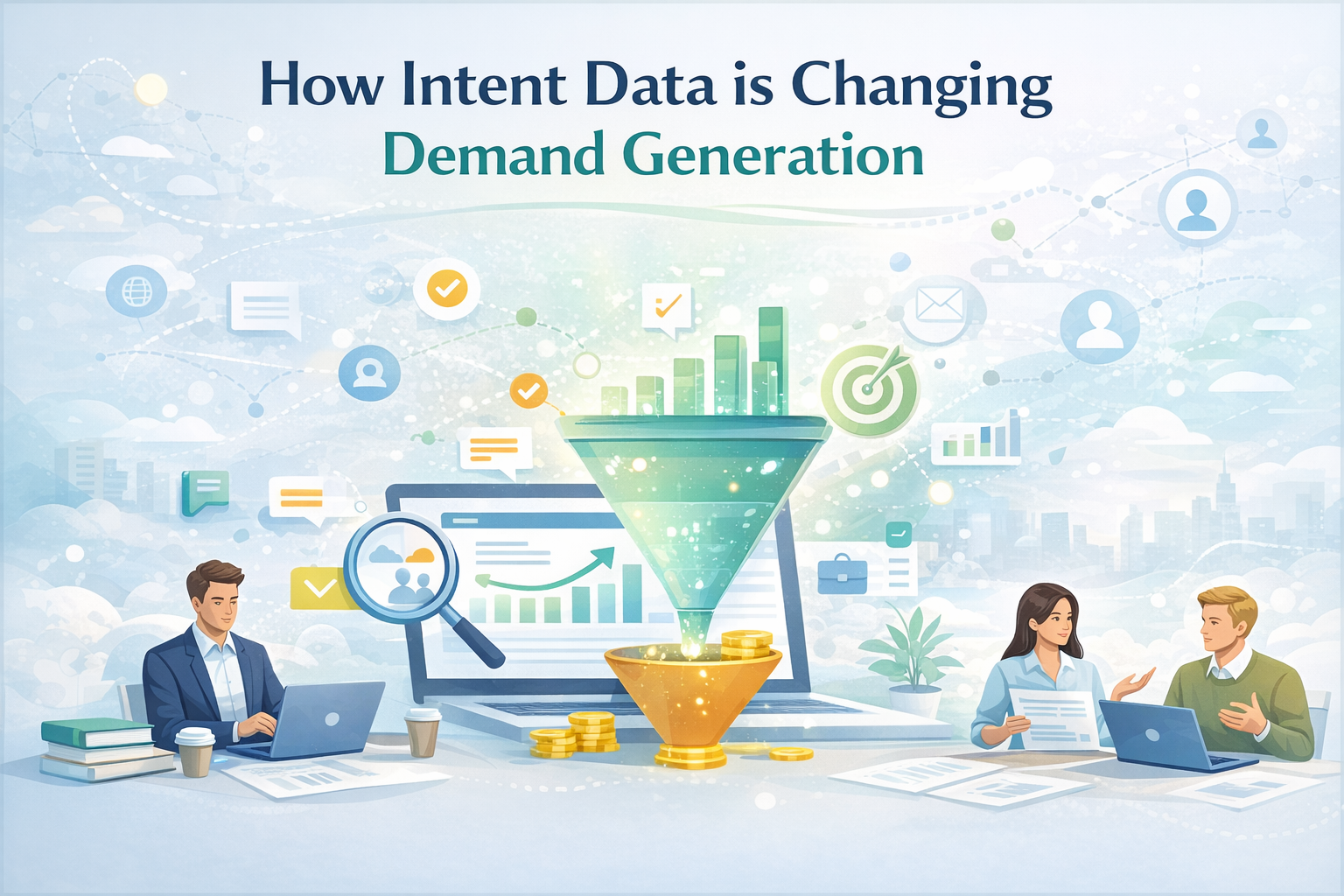
This shift has led to the rise of intent data—a powerful approach that enables businesses to identify prospects actively researching solutions. For B2B media houses, intent data is transforming how campaigns are planned, executed, and optimized to deliver high-intent leads and measurable outcomes.
By aligning outreach with real-time buyer behavior, intent data is redefining demand generation from a volume-driven process to a precision-driven growth strategy.
What is Intent Data in B2B Marketing?
Intent data refers to behavioral signals that indicate a prospect’s interest in a specific product, service, or topic.
These signals are gathered from various digital touchpoints, including:
- Content consumption across industry platforms
- Search behavior and topic engagement
- Interactions with relevant marketing assets
- Engagement across professional networks
For B2B media houses, intent data provides visibility into who is actively in-market, enabling more targeted and effective campaigns.
The Shift from Traditional to Intent-Driven Demand Generation
Traditional demand generation often focuses on:
- Broad audience targeting
- High-volume lead capture
- Generic messaging
In contrast, intent-driven demand generation focuses on:
- Identifying in-market accounts
- Prioritizing high-intent prospects
- Delivering personalized, context-driven engagement
This shift allows media houses to move from reactive marketing to proactive engagement, reaching prospects at the right stage of their buying journey.
Why Intent Data is a Game-Changer
Intent data brings several advantages that significantly improve demand generation performance.
Key Benefits:
- Higher Lead Quality
Focuses on prospects already researching solutions - Improved Conversion Rates
Aligns messaging with buyer intent - Shorter Sales Cycles
Engages prospects closer to decision-making - Better Marketing Efficiency
Reduces wasted effort on low-intent audiences
For B2B media houses, this means delivering campaigns that generate more relevant and conversion-ready leads.
Identifying High-Intent Audiences
Intent data allows businesses to pinpoint audiences showing strong buying signals.
Key Indicators of Intent:
- Increased engagement with specific topics
- Repeated interaction with related content
- Search patterns aligned with solutions
- Activity across multiple platforms
By analyzing these signals, media houses can help clients focus on accounts most likely to convert, improving overall campaign effectiveness.
Enhancing Targeting and Personalization
One of the biggest impacts of intent data is on targeting and personalization.
With deeper insights into buyer behavior, campaigns can be tailored to:
- Address specific challenges and needs
- Deliver relevant content at the right time
- Align messaging with industry context
This level of personalization leads to stronger engagement and higher response rates.
Powering Multi-Channel Demand Generation
Intent data is most effective when integrated into a multi-channel strategy.
Key Channels:
- LinkedIn – Targeting professionals based on activity and interests
- Email Campaigns – Delivering personalized outreach
- Content Distribution – Reaching audiences across industry platforms
- Sales Engagement – Supporting timely follow-ups
By aligning these channels with intent signals, media houses can create cohesive and high-performing campaigns.
Strengthening Sales and Marketing Alignment
Intent data bridges the gap between marketing and sales teams.
It enables:
- Shared visibility into high-intent accounts
- Better lead qualification
- More informed and timely outreach
This alignment ensures that both teams focus on prospects with the highest potential, improving pipeline efficiency.
Measuring the Impact of Intent-Driven Campaigns
To evaluate success, B2B media houses track:
- Engagement from high-intent accounts
- Conversion rates across campaigns
- Pipeline contribution from intent-driven leads
- Overall ROI of demand generation efforts
These metrics provide clear insights into how intent data enhances performance and drives results.
Scaling Demand Generation with Intent Data
As businesses grow, intent data becomes a scalable foundation for demand generation.
This includes:
- Expanding targeting across new markets
- Continuously refining audience segmentation
- Leveraging data for predictive insights
- Optimizing campaigns based on performance trends
With the right approach, intent data enables consistent and scalable lead generation.
Conclusion
Intent data is transforming demand generation by enabling businesses to focus on precision, relevance, and timing.
For B2B media houses, it provides a powerful way to deliver high-intent leads, improve campaign performance, and drive measurable growth.
By leveraging intent signals, aligning strategies with buyer behavior, and integrating multi-channel engagement, businesses can move beyond traditional approaches and build more effective and predictable demand generation systems.