


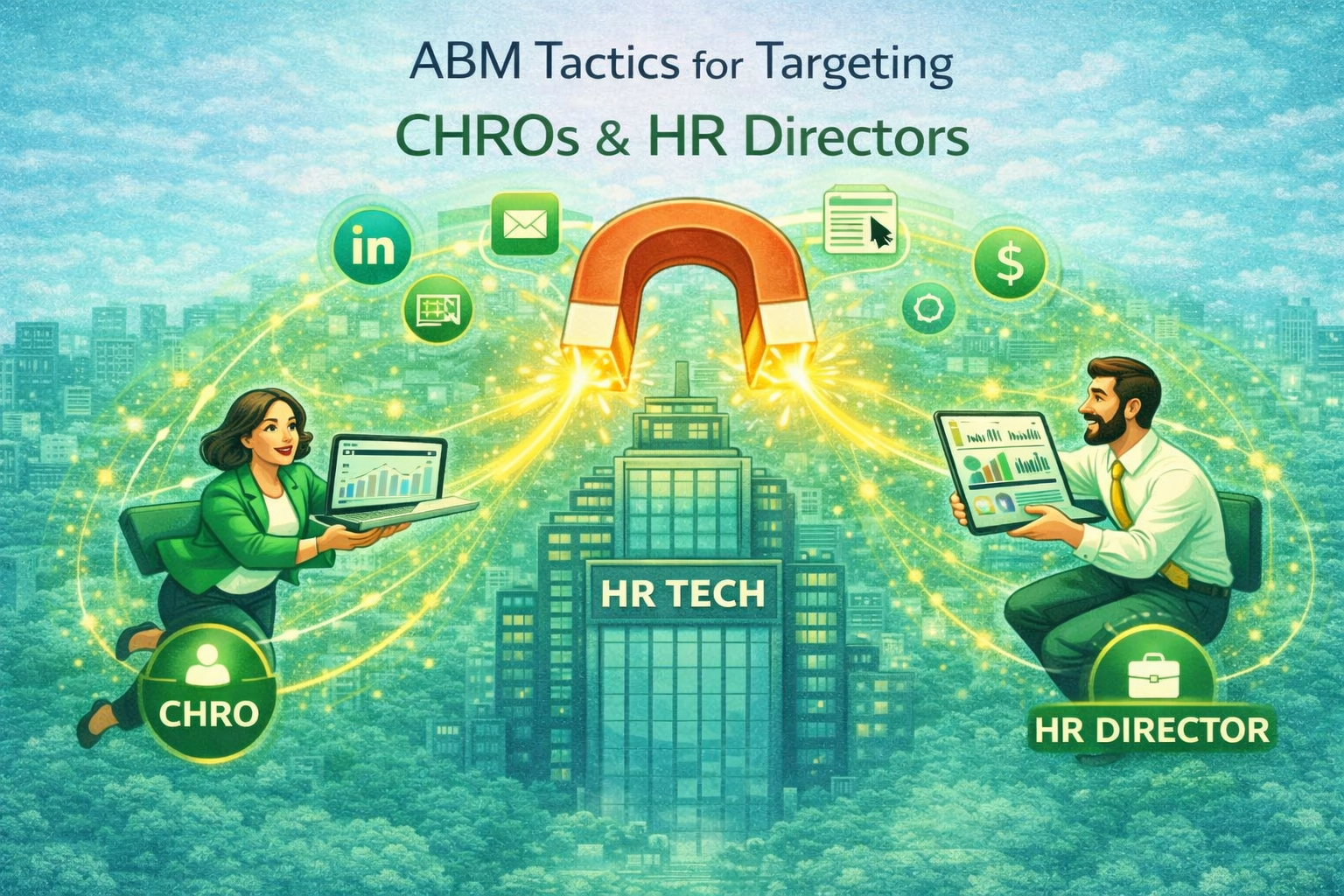
Reaching senior HR decision-makers like CHROs and HR Directors is one of the biggest challenges for HR tech companies. These leaders are responsible for strategic workforce decisions and are highly selective about the solutions they consider.
Traditional demand generation often lacks the precision needed to engage them effectively. Account-Based Marketing (ABM) provides a scalable approach to target, engage, and convert these high-value stakeholders with personalized and relevant messaging.
Why CHROs and HR Directors Require a Targeted Approach
CHROs and HR Directors focus on:
- Workforce strategy and transformation
- Employee experience and retention
- Compliance and risk management
- Data-driven HR decision-making
They are:
- Highly selective in vendor engagement
- Focused on outcomes rather than features
- Engaged only by relevant, value-driven communication
To capture their attention, marketing must be strategic, personalized, and insight-led.
What Makes ABM Effective at Scale
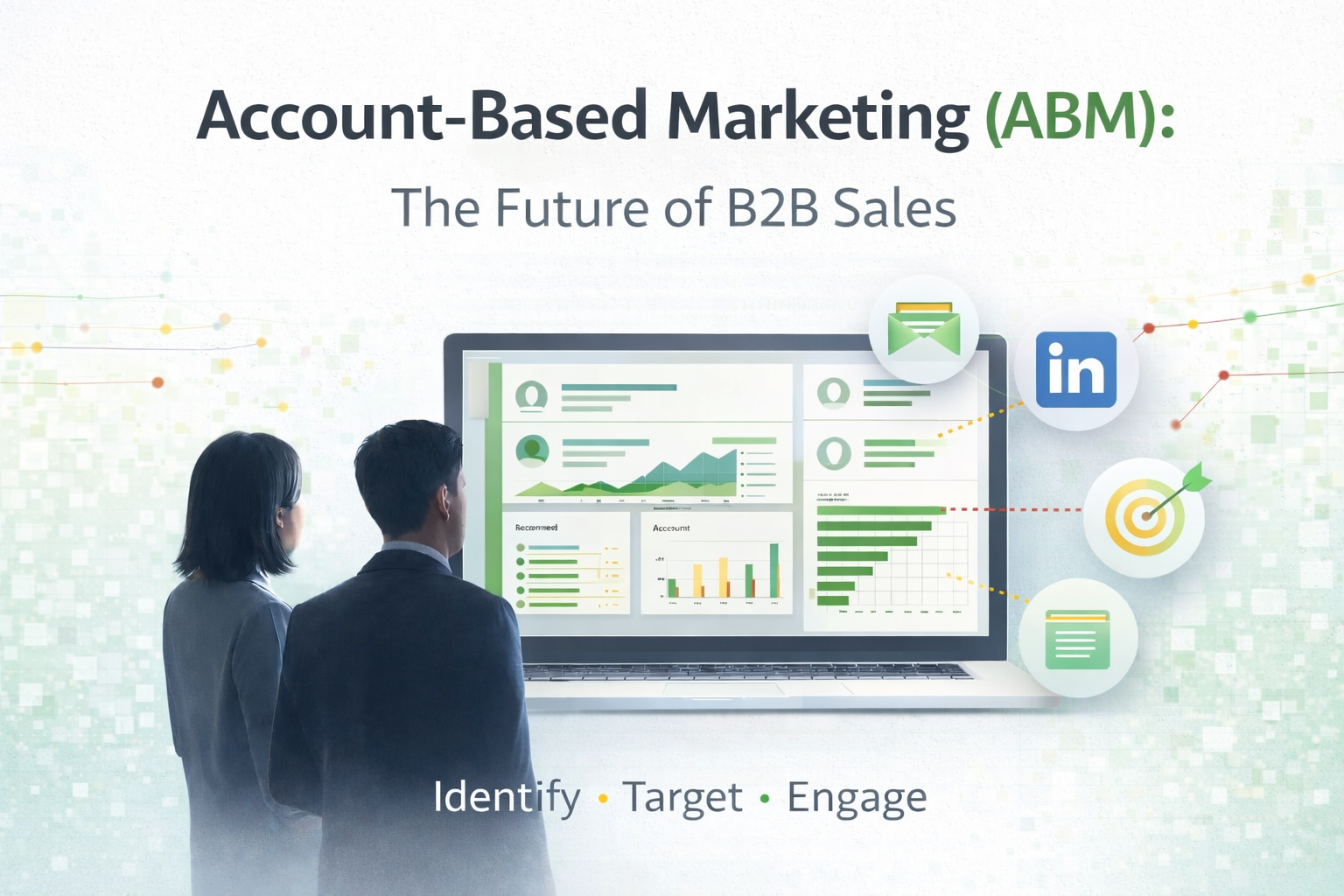
Account-Based Marketing focuses on targeting specific high-value accounts and stakeholders, rather than broad audiences.
At scale, ABM enables HR tech companies to:
- Reach multiple decision-makers across target accounts
- Personalize messaging using data and segmentation
- Deliver consistent engagement across channels
This ensures both precision and scalability, which is critical for enterprise-focused growth.
1. Identify and Segment High-Value Accounts
The foundation of ABM is selecting the right accounts.
Focus on organizations that:
- Have large or growing workforces
- Are investing in HR digital transformation
- Operate in compliance-heavy or people-intensive industries
Segment accounts based on:
- Industry
- Company size
- HR maturity level
This allows for more targeted and effective campaigns.
2. Map CHROs and HR Directors Within Target Accounts
Enterprise HR decisions involve key stakeholders such as:
- CHROs
- HR Directors
- HR Operations Leaders
Understanding their priorities helps tailor communication:
- CHROs → Strategy, workforce planning, ROI
- HR Directors → Process efficiency, employee engagement
This ensures messaging resonates with each role.
3. Personalize Messaging Without Losing Scale
One of the biggest advantages of ABM is combining personalization with scalability.
Using data and segmentation, you can:
- Deliver industry-specific messaging
- Highlight relevant use cases
- Address role-specific challenges
Examples:
- For CHROs: Focus on strategic workforce outcomes
- For HR Directors: Emphasize operational efficiency and automation
This balance improves engagement while maintaining campaign reach.
4. Execute Multi-Channel ABM Campaigns
To effectively reach HR leaders, ABM must operate across multiple channels.
Key channels include:
- LinkedIn for precise role-based targeting
- Email campaigns for personalized outreach
- Content syndication to reach HR audiences at scale
- Retargeting ads to reinforce messaging
A coordinated approach ensures consistent visibility across the buyer journey.
5. Use Intent Data to Prioritize Engagement
Intent data helps identify when target accounts are actively exploring HR solutions.
Key signals include:
- Searches related to HRMS or HR automation
- Engagement with HR-focused content
- Visits to product or comparison pages
By focusing on accounts showing these signals, outreach becomes more timely and effective.
6. Deliver Executive-Level Content
CHROs and HR Directors expect high-value, insight-driven content.
Content that performs well includes:
- HR trend reports and executive insights
- Case studies with measurable outcomes
- ROI and cost optimization analyses
- Strategic guides on HR transformation
This type of content supports both evaluation and internal decision-making.
7. Align Sales and Marketing for Account Engagement
ABM success depends on strong collaboration between teams.
This includes:
- Sharing account-level insights and engagement data
- Coordinating outreach strategies
- Personalizing follow-ups based on interactions
Aligned efforts ensure a seamless and consistent experience for prospects.
8. Measure Success at the Account Level
ABM performance should be tracked differently from traditional campaigns.
Key metrics include:
- Engagement from CHROs and HR Directors
- Number of stakeholders reached per account
- Meetings and opportunities generated
- Pipeline contribution and deal size
These metrics provide a clear view of campaign effectiveness.
Conclusion
Targeting CHROs and HR Directors at scale requires more than broad marketing—it requires precision, personalization, and strategic execution. Account-Based Marketing enables HR tech companies to engage these decision-makers effectively while maintaining scalability.
By combining targeted account selection, data-driven insights, and multi-channel engagement, businesses can build strong relationships and drive high-value pipeline.
In today’s competitive HR tech market, ABM is a powerful approach to reach and convert the right leaders at the right time.