


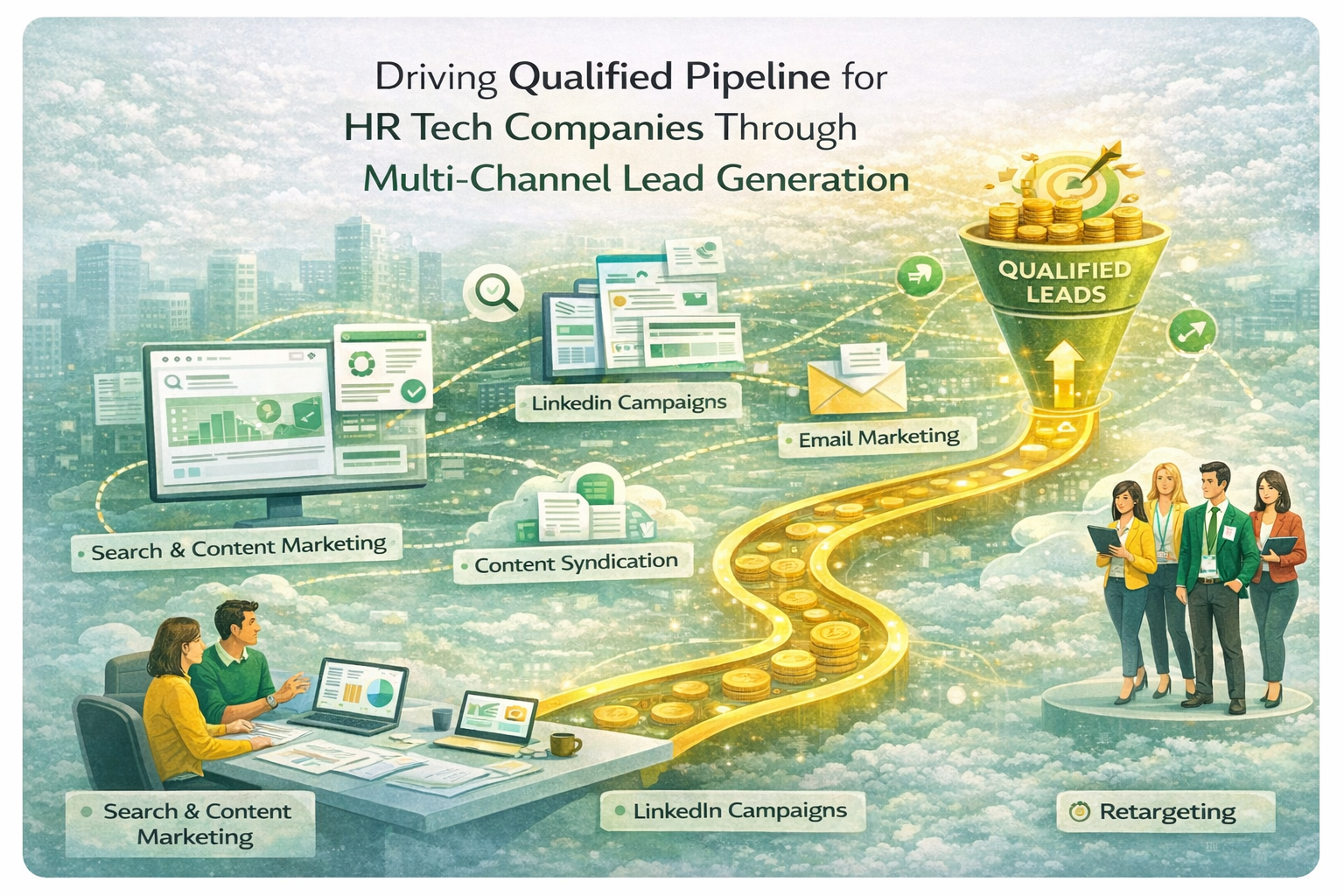
As the HR technology landscape continues to evolve, companies are investing heavily in solutions that improve workforce management, employee experience, and compliance. However, for HR tech providers, generating leads is no longer the challenge, building a qualified pipeline that converts into revenue is.
Modern HR buyers engage across multiple platforms before making a decision. This makes multi-channel lead generation essential for reaching, nurturing, and converting the right audience.
Why Qualified Pipeline Matters in HR Tech
HR tech buying decisions involve:
- Multiple stakeholders (HR, finance, IT)
- Long evaluation cycles
- High expectations around usability and ROI
A qualified pipeline ensures that:
- Leads have genuine intent
- Sales cycles are shorter
- Conversion rates are higher
Focusing on quality over quantity leads to more predictable growth.
1. Define Your Ideal Customer Profile (ICP)
A strong pipeline starts with targeting the right audience.
For HR tech companies, ideal customers may include:
- Mid-to-large organizations scaling their workforce
- Companies undergoing digital HR transformation
- Industries with complex HR and compliance needs
Key personas:
- CHROs and HR Directors
- HR Operations Managers
- Talent and People Leaders
A clearly defined ICP ensures all campaigns are aligned with high-potential accounts.
2. Capture High-Intent Traffic Through Search and Content
HR professionals actively search for solutions to specific challenges.
Focus on SEO-driven content around:
- “Best HR software for growing companies”
- “How to automate payroll and compliance”
- “HRMS vs traditional HR processes”
High-performing content formats:
- Blogs and guides
- Case studies with measurable outcomes
- HR trend reports
- Comparison content
This attracts prospects who are already in the research phase.
3. Expand Reach with Content Syndication
Content syndication helps HR tech companies reach targeted HR audiences beyond their own platforms.
By promoting:
- HR compliance guides
- Employee experience reports
- Payroll automation case studies
you can generate leads from HR decision-makers who are actively engaging with relevant content.
This channel is particularly effective for building top and mid-funnel pipeline.
4. Leverage LinkedIn for Precision Targeting
LinkedIn is one of the most effective platforms for reaching HR professionals.
Target based on:
- Job roles (CHRO, HR Manager, Talent Lead)
- Industry and company size
- Seniority level
Effective LinkedIn strategies:
- Sponsored content for thought leadership
- Lead generation forms for gated assets
- Conversation ads for direct engagement
This ensures your campaigns reach the right decision-makers.
5. Use Email Marketing for Lead Nurturing
Email remains a powerful channel for moving prospects through the funnel.
A structured email strategy should:
- Provide educational and value-driven content
- Address HR-specific challenges
- Guide prospects toward evaluation and decision
Example flow:
- Awareness: Industry insights and trends
- Consideration: Case studies and comparisons
- Decision: Demo offers and ROI-focused messaging
Consistent nurturing builds trust and engagement.
6. Retarget Interested Prospects Across Channels
Most HR buyers won’t convert on the first interaction.
Retargeting helps:
- Re-engage website visitors and content consumers
- Reinforce your value proposition
- Promote deeper content like demos or webinars
This keeps your brand visible throughout the decision-making process.
7. Align Messaging with HR Challenges
HR decision-makers evaluate solutions based on outcomes, not features.
Your messaging should focus on:
- Automating manual HR processes
- Improving employee experience
- Ensuring compliance and accuracy
- Enhancing data visibility and reporting
Clear, problem-focused messaging improves engagement and lead quality.
8. Track and Optimize Pipeline Performance
To maximize results, focus on metrics that reflect pipeline quality:
- Cost per qualified lead (CPL)
- Lead-to-opportunity conversion rate
- Engagement by channel
- Pipeline contribution
Regular analysis helps refine targeting, messaging, and channel strategy.
Conclusion
Driving a qualified pipeline in the HR tech space requires more than isolated campaigns. It demands a multi-channel approach that connects with HR decision-makers across their entire buying journey.
By combining search-driven content, content syndication, LinkedIn targeting, email nurturing, and retargeting, HR tech companies can build a scalable pipeline of high-intent prospects.
In a competitive market, success comes from delivering consistent, relevant, and value-driven engagement across every channel.