


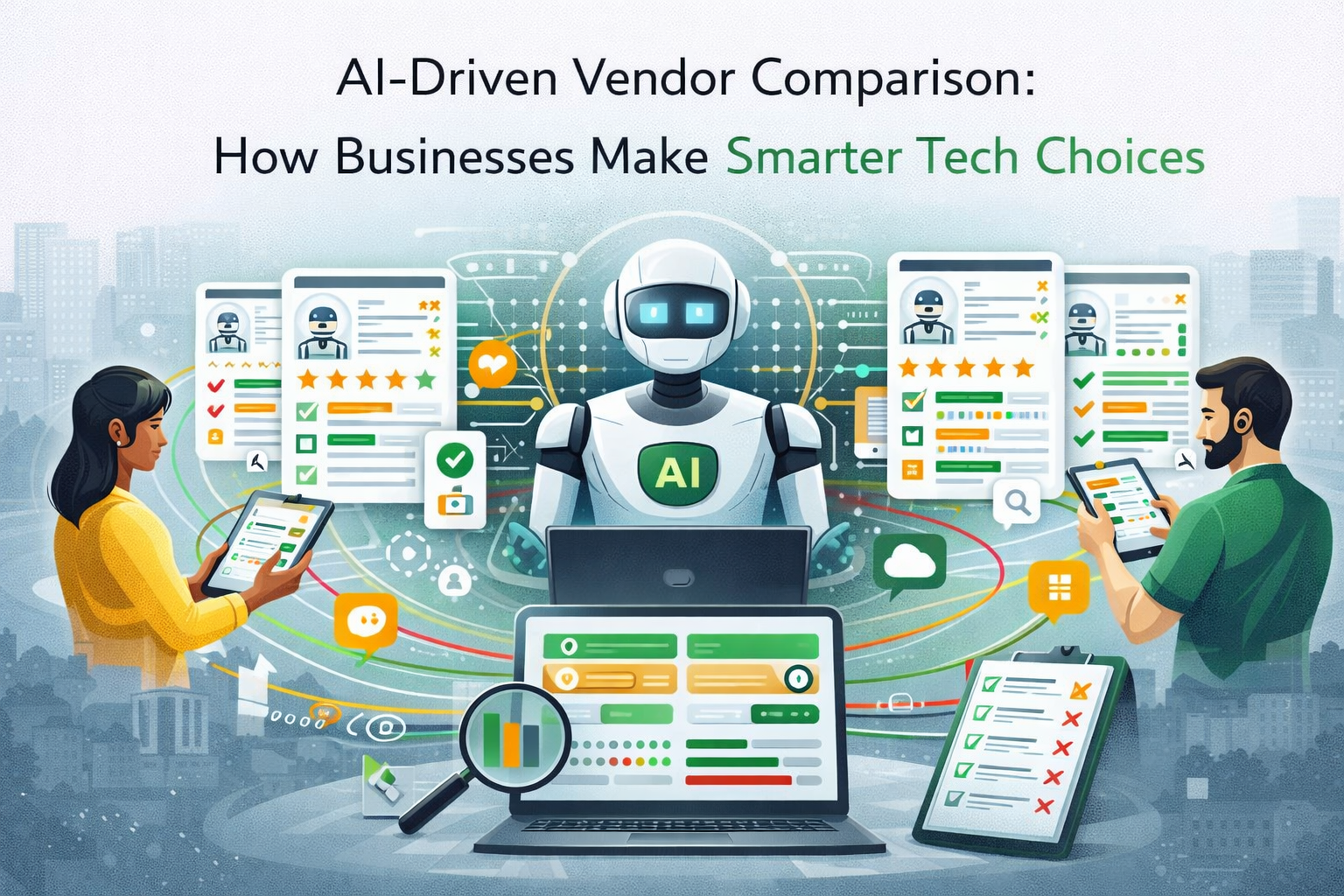
Choosing the right technology vendor has become one of the most critical — and complex — decisions for modern B2B organizations. With countless tools, platforms, and service providers in the market, traditional vendor evaluation methods are often slow, subjective, and data-poor. This is why AI-driven vendor comparison is reshaping how businesses make smarter, faster, and more confident tech decisions.
By leveraging artificial intelligence, organizations can turn vendor selection from a manual process into a data-driven competitive advantage.
What Is AI-Driven Vendor Comparison?
AI-driven vendor comparison uses machine learning, natural language processing, and advanced analytics to evaluate vendors across multiple dimensions such as:
- Pricing and total cost of ownership
- Feature sets and capabilities
- Performance and reliability
- Security and compliance
- Customer reviews and market sentiment
AI analyzes large volumes of structured and unstructured data to deliver objective, real-time insights that support better decision-making.
Why Traditional Vendor Selection Methods Fall Short
Conventional vendor comparison approaches rely heavily on:
- Manual spreadsheets and scorecards
- Subjective opinions and limited data
- Time-consuming RFP processes
- Incomplete or outdated information
These methods often lead to biased decisions, extended procurement cycles, and costly technology mismatches.
Key Benefits of AI-Driven Vendor Comparison for Businesses
1. Faster Decision-Making
AI automates data collection and analysis, significantly reducing the time required to evaluate and shortlist vendors.
2. Objective and Data-Backed Insights
AI eliminates bias by comparing vendors based on measurable performance, capabilities, and real-world usage data.
3. Improved Cost Efficiency
Advanced analytics uncover hidden costs, optimize budgets, and help businesses select vendors with the best ROI.
4. Better Risk Assessment
AI evaluates security posture, compliance history, and reliability — reducing operational and financial risk.
5. Smarter Long-Term Vendor Partnerships
By aligning vendor capabilities with business goals, organizations build stronger, more sustainable partnerships.
How AI Is Transforming Vendor Comparison Processes
Intelligent RFP Analysis
AI analyzes proposals quickly, extracting key details and comparing them across vendors with precision.
Real-Time Market Intelligence
AI continuously monitors market trends, vendor performance, and customer sentiment to keep evaluations current.
Predictive Performance Insights
Machine learning models forecast vendor performance based on historical data and usage patterns.
Custom Scoring Models
AI creates weighted scoring frameworks tailored to each organization’s priorities and KPIs.
AI-Driven Vendor Comparison and Digital Transformation
AI-powered vendor evaluation plays a key role in digital transformation strategies by enabling smarter technology investments and reducing decision-making friction.
By choosing the right tools faster, businesses accelerate innovation, improve operational efficiency, and stay competitive.
Who Should Use AI-Driven Vendor Comparison?
AI-driven vendor comparison is ideal for:
- CIOs, CTOs, and IT leaders
- Procurement and sourcing teams
- Enterprises evaluating SaaS and cloud platforms
- Organizations undergoing digital transformation
Any business making frequent or high-impact technology decisions can benefit.
The Future of Vendor Selection Is AI-Powered
As AI capabilities advance, vendor comparison tools will become more predictive, personalized, and automated. Organizations that adopt AI-driven approaches early will gain a clear advantage through faster decisions, reduced risk, and better technology outcomes.
Conclusion
AI-driven vendor comparison is transforming how businesses choose technology partners. By replacing manual processes with intelligent automation and analytics, organizations can make smarter, faster, and more confident tech decisions.
In a competitive digital landscape, AI-driven vendor comparison isn’t just an efficiency upgrade — it’s a strategic necessity.