

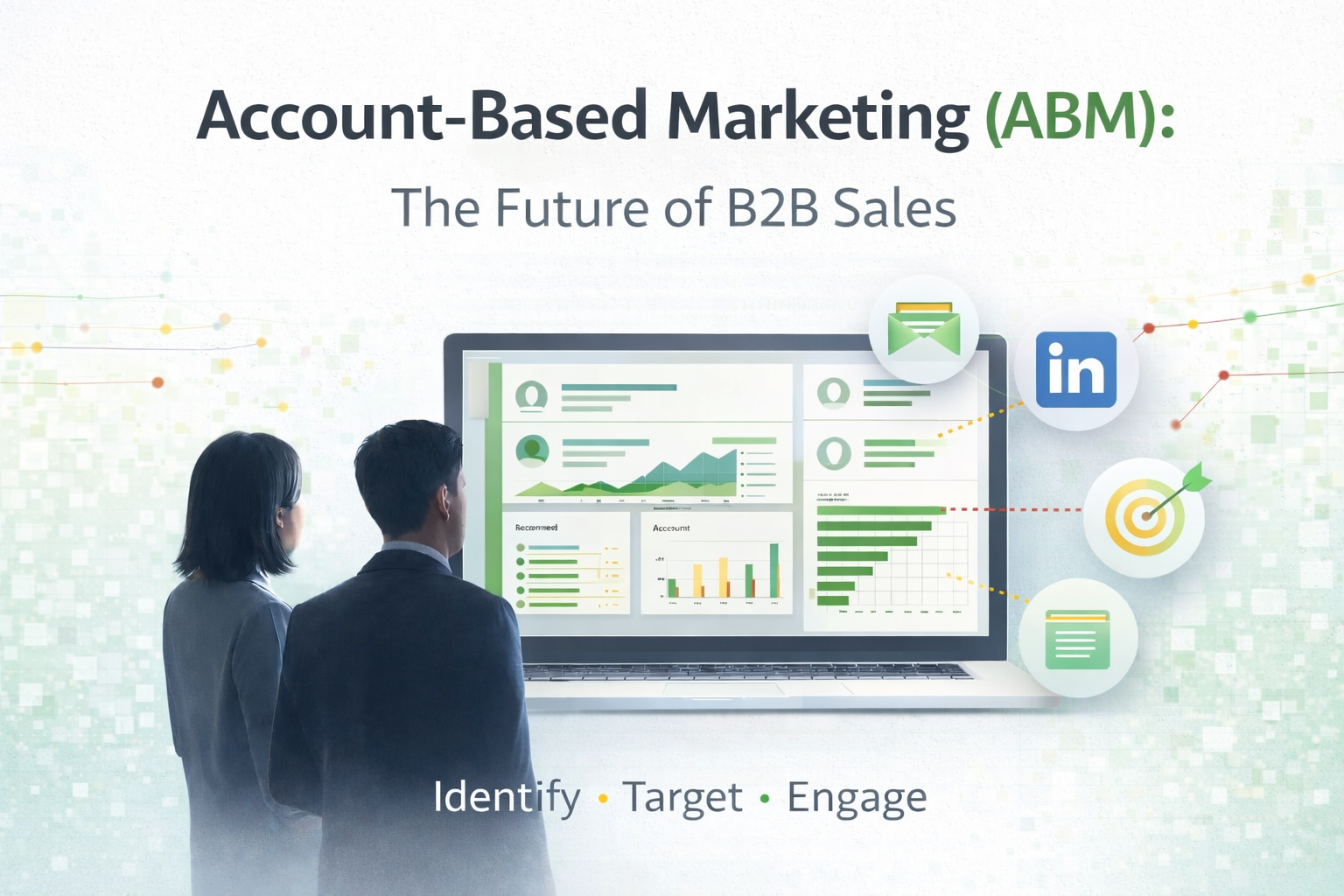
In today’s competitive B2B environment, businesses are moving away from traditional mass marketing approaches and focusing on more targeted, personalized strategies. One approach that has gained significant traction in recent years is Account-Based Marketing (ABM).
Rather than targeting a large audience with generic campaigns, ABM focuses on high-value accounts and delivers highly personalized marketing and sales efforts. This strategic alignment between marketing and sales teams is why many experts consider ABM the future of B2B sales.
What Is Account-Based Marketing (ABM)?
Account-Based Marketing (ABM) is a strategic approach where businesses identify and target specific high-value accounts with personalized marketing campaigns. Instead of generating a large number of leads, ABM focuses on engaging key decision-makers within targeted organizations.
In ABM, marketing and sales teams work closely together to:
- Identify target accounts
- Understand their challenges and needs
- Deliver tailored messaging and content
- Build long-term relationships that lead to high-value deals
This focused strategy helps businesses maximize their marketing and sales ROI.
Why ABM Is Gaining Popularity in B2B Sales
Traditional lead generation models often prioritize quantity over quality. As a result, sales teams spend significant time chasing leads that may never convert.
ABM addresses this challenge by focusing on the right accounts instead of more accounts.
Key reasons why ABM is gaining momentum include:
- Higher conversion rates from targeted accounts
- Better alignment between marketing and sales teams
- More efficient use of marketing budgets
- Stronger relationships with high-value customers
For companies with long and complex sales cycles, ABM provides a smarter and more strategic approach.
Key Benefits of Account-Based Marketing
1. Higher Quality Leads
ABM focuses on accounts that are most likely to convert, ensuring marketing efforts target businesses with genuine buying potential.
2. Better Sales and Marketing Alignment
ABM encourages collaboration between marketing and sales teams, improving communication and campaign effectiveness.
3. Personalized Customer Experiences
Customized messaging and content help businesses connect with decision-makers on a deeper level.
4. Improved ROI
Because campaigns are targeted toward high-value accounts, ABM often delivers a higher return on marketing investment.
5. Shorter Sales Cycles
Engaging key stakeholders with personalized content helps accelerate the decision-making process.
How Account-Based Marketing Works
A successful ABM strategy typically follows several key steps:
Identify High-Value Target Accounts
Businesses analyze their ideal customer profiles (ICP) and identify organizations that match their best customers.
Research Decision-Makers
Understanding the roles, priorities, and pain points of decision-makers helps create more effective messaging.
Create Personalized Campaigns
Marketing teams develop targeted content, emails, ads, and outreach strategies tailored to specific accounts.
Align Sales and Marketing Efforts
Both teams collaborate to ensure consistent messaging and coordinated engagement throughout the buying journey.
Measure and Optimize Campaigns
Analytics and engagement data help teams refine strategies and improve results over time.
Channels Used in Account-Based Marketing
ABM campaigns typically leverage multiple channels, including:
- LinkedIn and professional social platforms
- Personalized email outreach
- Targeted advertising campaigns
- Custom landing pages
- Webinars and virtual events
- Sales outreach and relationship building
The key is delivering consistent, personalized messaging across every touchpoint.
How ABM Supports Modern B2B Sales
ABM helps sales teams focus on building relationships instead of chasing leads. By engaging the right accounts with tailored messaging, sales professionals can:
- Build stronger connections with decision-makers
- Deliver more relevant solutions
- Improve win rates and deal sizes
This strategic focus allows businesses to close higher-value deals and build long-term partnerships.
Account-Based Marketing Trends for 2026
As technology evolves, several trends are shaping the future of ABM:
AI-driven account insights
Artificial intelligence helps identify high-intent accounts and personalize outreach at scale.
Intent data and predictive analytics
Businesses can identify companies actively researching solutions and target them earlier in the buying journey.
Sales and marketing revenue teams
Organizations are combining marketing, sales, and customer success into unified revenue teams.
Hyper-personalization
Advanced data and automation tools enable highly personalized campaigns across multiple channels.
Who Should Use Account-Based Marketing?
ABM works particularly well for organizations that:
- Sell high-value B2B products or services
- Have long and complex sales cycles
- Target enterprise or mid-market accounts
- Want to improve marketing and sales alignment
Industries such as SaaS, technology services, consulting, and enterprise solutions benefit greatly from ABM strategies.
Conclusion
Account-Based Marketing is transforming how B2B companies approach sales and marketing. By focusing on high-value accounts and delivering personalized engagement, businesses can improve conversion rates, strengthen customer relationships, and maximize ROI.
As B2B markets become more competitive, organizations that adopt ABM will be better positioned to build strong pipelines and close larger deals.