


Tier-1 contractors represent some of the most lucrative opportunities for construction software companies. These organizations manage large-scale, high-value projects and require advanced solutions for planning, execution, and collaboration.
However, penetrating Tier-1 contractors is challenging. These companies have established systems, complex decision-making structures, and high expectations. To successfully engage them, construction software companies need a focused and strategic approach. Account-Based Marketing (ABM) provides the precision required to break into these high-value accounts.
Why Tier-1 Contractors Are Hard to Penetrate
Tier-1 contractors typically:
- Handle large infrastructure and commercial projects
- Operate across multiple locations and teams
- Have strict evaluation and procurement processes
- Use existing legacy or integrated systems
Their buying process involves:
- Project Directors and Construction Heads
- Operations and Planning Teams
- IT and Digital Transformation Leaders
- Procurement and Finance Stakeholders
This complexity makes generic marketing ineffective.
What Makes ABM Effective for Targeting Tier-1 Contractors
Account-Based Marketing focuses on targeting specific high-value accounts with personalized engagement.
For construction software companies, ABM helps:
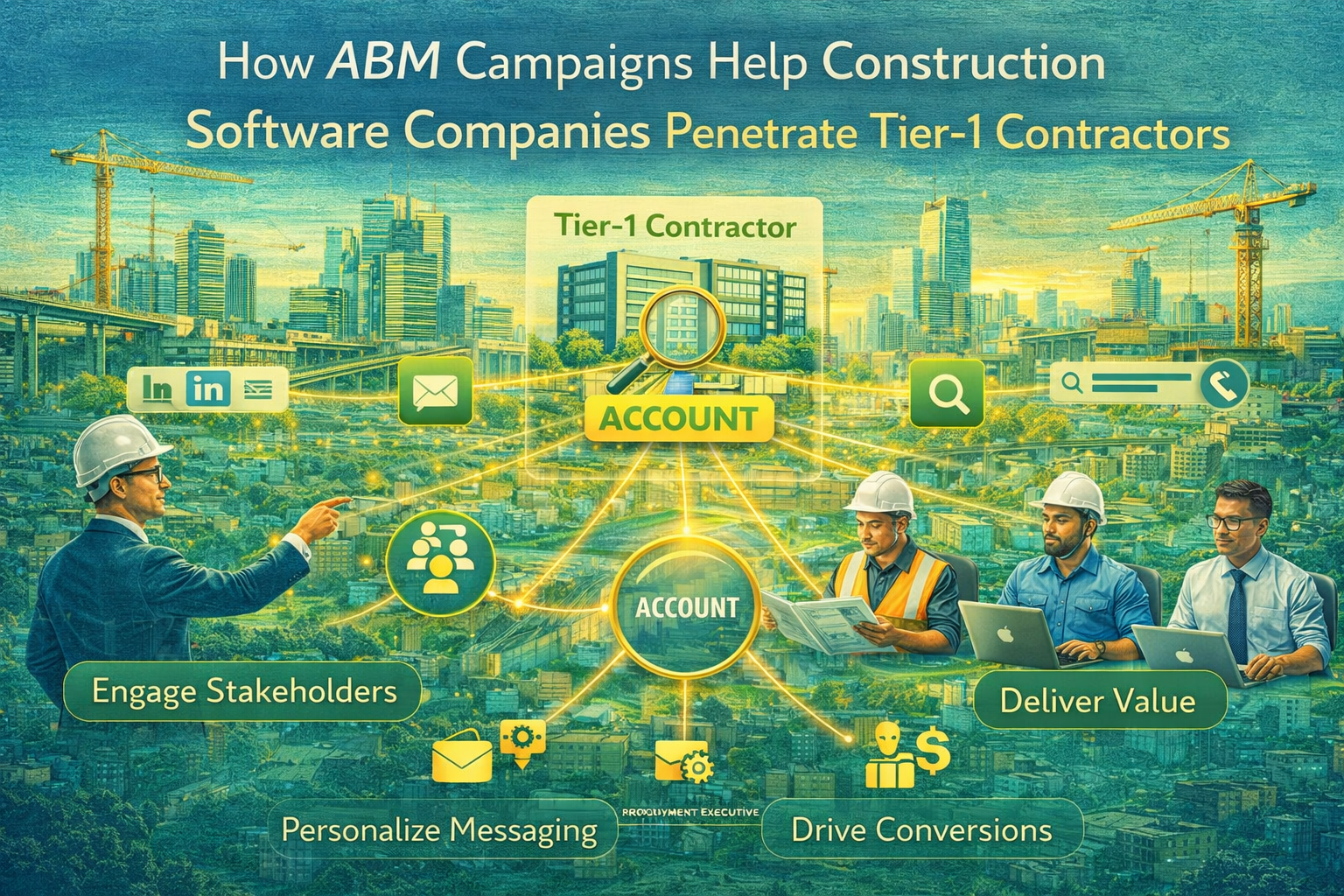
- Engage multiple stakeholders within Tier-1 contractors
- Deliver tailored messaging based on project needs
- Build relationships over time
- Increase deal size and conversion rates
This approach aligns perfectly with enterprise-level construction sales.
1. Identify and Prioritize Tier-1 Target Accounts
The first step is selecting the right contractors to target.
Focus on organizations that:
- Manage large-scale infrastructure or commercial projects
- Have complex project coordination requirements
- Are investing in digital construction tools
- Face challenges in visibility, cost control, and timelines
Using firmographic and project-based data helps identify high-potential accounts.
2. Map Stakeholders Across the Organization
Tier-1 contractors involve multiple decision-makers with different priorities:
- Project Directors focus on delivery and timelines
- Operations teams focus on efficiency and resource utilization
- IT teams focus on integration and system reliability
- Finance teams focus on cost control and ROI
Understanding these roles enables more targeted communication.
3. Personalize Messaging for Large-Scale Construction Challenges
To engage Tier-1 contractors effectively, messaging must address their specific challenges:
- Managing multiple projects simultaneously
- Ensuring real-time visibility across sites
- Reducing delays and cost overruns
- Improving coordination between teams
Personalization can include:
- Use cases based on project size and type
- Industry-specific case studies
- Custom value propositions
Relevant messaging increases engagement and credibility.
4. Execute Multi-Channel ABM Campaigns
Reaching stakeholders within Tier-1 contractors requires a coordinated multi-channel approach.
Key channels include:
- LinkedIn for targeting construction leaders and decision-makers
- Email outreach for personalized communication
- Content syndication for broader industry reach
- Retargeting campaigns to reinforce messaging
Consistent engagement across channels improves brand recall.
5. Use Intent Data to Identify Active Opportunities
Intent data helps identify when Tier-1 contractors are:
- Exploring construction management solutions
- Researching digital transformation in construction
- Comparing software vendors
Engaging accounts during this phase ensures timely and relevant outreach.
6. Deliver High-Value, Project-Focused Content
Tier-1 contractors require detailed and practical insights before making decisions.
Effective content includes:
- Case studies from large-scale construction projects
- ROI and cost optimization analyses
- Implementation and onboarding guides
- Industry-specific reports
This helps decision-makers evaluate solutions and build internal alignment.
7. Align Sales and Marketing for Account Penetration
ABM success depends on strong collaboration between teams.
This includes:
- Sharing insights on account engagement
- Coordinating outreach strategies
- Personalizing follow-ups based on interactions
Aligned efforts ensure a consistent and effective experience for prospects.
8. Measure Account-Level Engagement and Pipeline Impact
ABM performance should be measured at the account level.
Key metrics include:
- Engagement from target accounts
- Number of stakeholders reached
- Meetings and opportunities generated
- Pipeline contribution and deal size
These insights help refine targeting and improve campaign performance.
Conclusion
Penetrating Tier-1 contractors requires a strategic and focused approach that goes beyond traditional marketing. Account-Based Marketing enables construction software companies to engage high-value accounts with precision and relevance.
By identifying the right accounts, delivering personalized messaging, and maintaining consistent multi-channel engagement, businesses can build strong relationships and win enterprise-level deals.
In a competitive construction technology market, ABM provides the edge needed to successfully enter and grow within Tier-1 contractor accounts.