

Closing enterprise HR deals is one of the most complex challenges for HRMS platforms. Unlike SMB sales, enterprise-level decisions involve multiple stakeholders, longer evaluation cycles, and higher expectations around scalability, compliance, and integration.
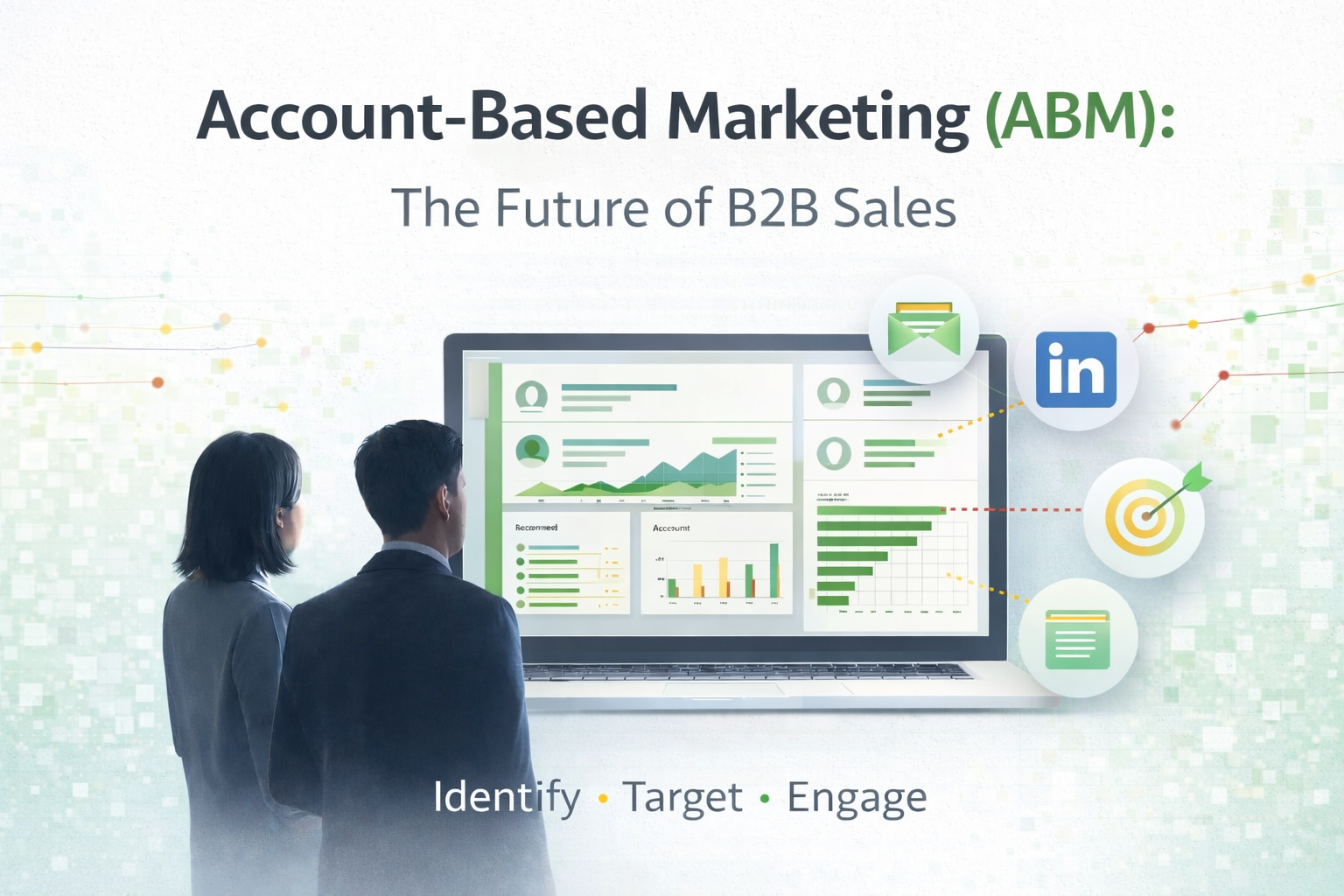
To succeed in this environment, a targeted and strategic approach is essential. Account-Based Marketing (ABM) enables HRMS companies to focus on high-value accounts and engage decision-makers with precision and relevance.
Why Enterprise HR Deals Require a Strategic Approach
Enterprise HR investments are critical and long-term. Organizations evaluate solutions based on:
- Scalability across large workforces
- Compliance with local and global regulations
- Integration with existing systems (ERP, payroll, finance tools)
- Impact on employee experience and productivity
The buying process often includes:
- HR leadership (CHROs, HR Directors)
- IT teams
- Finance and procurement stakeholders
This complexity requires a focused and personalized engagement strategy.
What Is ABM and Why It Works for HRMS Platforms
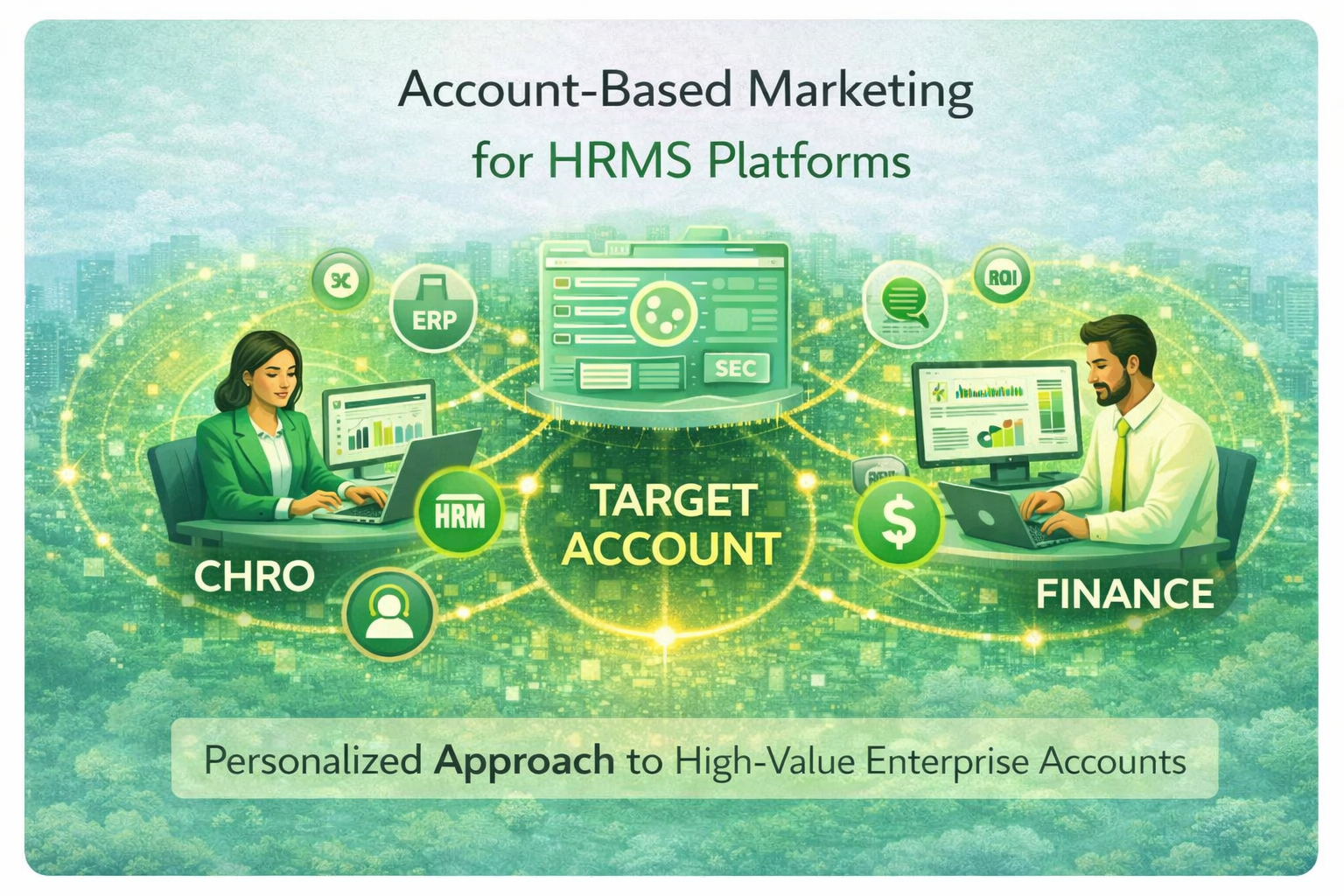
Account-Based Marketing (ABM) is a strategy that focuses on targeting specific high-value accounts instead of broad audiences.
For HRMS platforms, ABM helps:
- Engage enterprise decision-makers directly
- Personalize communication for multiple stakeholders
- Improve deal size and conversion rates
It shifts the focus from lead quantity to account quality and engagement depth.
1. Identify High-Value Enterprise Accounts
The first step in ABM is selecting the right accounts.
Focus on organizations that:
- Have large or distributed workforces
- Are undergoing HR digital transformation
- Rely on manual or outdated HR processes
- Operate in compliance-heavy industries
Using firmographic and technographic data helps identify accounts with the highest potential value.
2. Map Key Stakeholders in the Buying Committee
Enterprise HR deals involve multiple stakeholders, each with different priorities:
- CHROs → Workforce strategy and employee experience
- HR Operations → Process efficiency and usability
- IT Teams → Integration, security, and system reliability
- Finance Teams → Cost and ROI
Understanding these roles allows for targeted messaging that resonates with each stakeholder.
3. Personalize Messaging for Enterprise HR Challenges
Generic messaging does not work in enterprise sales.
Your communication should address:
- Workforce scalability and global operations
- Compliance and regulatory requirements
- Automation of HR processes
- Data-driven decision-making
Personalization can include:
- Industry-specific use cases
- Custom value propositions
- Relevant enterprise case studies
This builds trust and positions your solution as a strategic investment.
4. Execute Multi-Channel ABM Campaigns
To effectively reach enterprise stakeholders, ABM must be executed across multiple channels.
Key channels include:
- LinkedIn for precise role-based targeting
- Email outreach for personalized engagement
- Content syndication to reach HR audiences at scale
- Retargeting campaigns to maintain visibility
A coordinated approach ensures consistent messaging across touchpoints.
5. Leverage Intent Data for Better Timing
Timing plays a crucial role in enterprise deal success.
Intent data helps identify when target accounts are:
- Researching HRMS platforms
- Exploring HR automation and compliance solutions
- Comparing vendors
Engaging accounts during this phase increases the chances of meaningful conversations.
6. Deliver High-Value Content for Enterprise Buyers
Enterprise HR leaders require detailed and credible information.
Content that supports enterprise deals includes:
- Case studies showcasing large-scale implementations
- ROI and cost optimization reports
- Technical documentation and integration details
- Industry-specific HR insights
This helps stakeholders make informed decisions and justify investments internally.
7. Align Sales and Marketing for Account Success
ABM requires strong collaboration between teams.
This includes:
- Sharing account-level insights and engagement data
- Coordinating outreach strategies
- Personalizing follow-ups based on interactions
Aligned teams can deliver a seamless and consistent experience to prospects.
8. Measure ABM Performance at the Account Level
Traditional metrics are not enough for ABM.
Focus on:
- Account engagement levels
- Number of stakeholders reached
- Meetings and opportunities generated
- Pipeline contribution and deal size
These metrics provide a clearer view of campaign effectiveness.
Conclusion
Winning enterprise HR deals requires a focused, personalized, and data-driven approach. Account-Based Marketing enables HRMS platforms to engage high-value accounts with relevance and precision.
By targeting the right organizations, delivering tailored messaging, and aligning efforts across channels, businesses can build stronger relationships and close larger deals more effectively.
In the enterprise HR tech space, success is not about reaching more prospects—it’s about engaging the right accounts with the right strategy.