


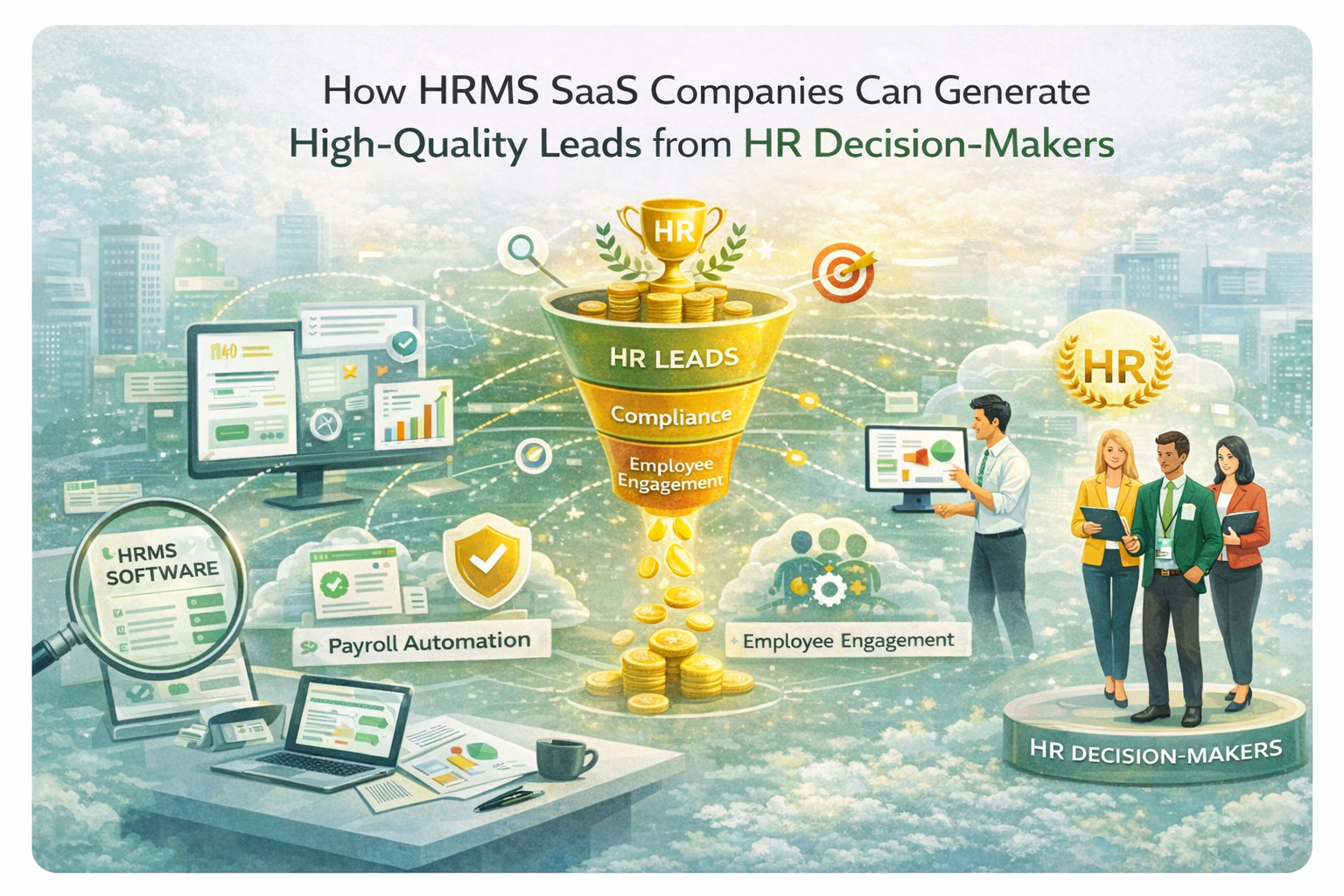
As organizations continue to prioritize workforce efficiency, compliance, and employee experience, the demand for HRMS (Human Resource Management Systems) is growing rapidly. However, for HRMS SaaS companies, the challenge is not just generating leads, but attracting high-quality HR decision-makers who are actively evaluating solutions.
With longer buying cycles and multiple stakeholders involved, success depends on a strategic approach that combines intent, relevance, and targeted engagement.
Why High-Quality Leads Matter in HRMS Sales
HR software decisions are critical and often involve:
- Budget approvals from leadership
- Evaluation by HR and IT teams
- Long-term implementation considerations
High-quality leads typically:
- Have a clear need for HR automation
- Are actively researching HRMS platforms
- Are closer to making purchase decisions
Focusing on these prospects improves conversion rates and shortens the sales cycle.
1. Identify HR Buyers with Active Intent
The most effective way to generate quality leads is by targeting organizations already exploring HR solutions.
Key intent signals include:
- Searches like “best HRMS software for enterprises” or “HR automation tools”
- Engagement with content on payroll, compliance, or employee management
- Visits to pricing, demo, or comparison pages
Tracking these behaviors helps identify HR leaders who are in the evaluation stage.
2. Create Problem-Solving, SEO-Driven Content
HR decision-makers are not searching for software, they are searching for solutions to challenges such as:
- Managing payroll and compliance efficiently
- Improving employee engagement and retention
- Automating manual HR processes
Content topics that attract high-intent leads:
- “How to automate HR processes in growing organizations”
- “Top HRMS features for compliance and payroll management”
- “HRMS vs manual HR: cost and efficiency comparison”
High-performing formats:
- Blogs and guides
- Case studies with measurable outcomes
- HR trend reports
- ROI-focused content
Optimized content ensures visibility among HR professionals actively researching solutions.
3. Target the Right HR Personas
HRMS buying decisions involve multiple stakeholders.
Key personas include:
- CHROs and HR Directors
- HR Managers and Operations Heads
- Talent and People Operations Leaders
Each role has different priorities:
- Leadership focuses on strategy and ROI
- HR managers focus on usability and efficiency
- Operations teams focus on process optimization
Tailoring messaging to each persona improves engagement and lead quality.
4. Leverage Multi-Channel Campaigns for Reach
HR decision-makers engage across multiple platforms before making a decision.
A multi-channel strategy helps maintain visibility:
- Search marketing to capture high-intent traffic
- LinkedIn campaigns to target HR professionals by role and industry
- Email marketing for nurturing and education
- Content syndication to expand reach
Consistent presence across channels increases brand recall and engagement.
5. Use Content Syndication to Reach HR Audiences at Scale
Content syndication helps distribute your content to targeted HR audiences across industries.
By promoting assets like:
- HR compliance guides
- Payroll automation case studies
- Employee experience reports
you can generate leads from HR professionals who are actively consuming relevant content.
This ensures higher lead quality compared to broad outreach.
6. Address Key HR Challenges in Messaging
HR decision-makers evaluate solutions based on how well they solve real problems.
Your messaging should focus on:
- Simplifying compliance and payroll
- Enhancing employee experience
- Reducing manual workload
- Improving data visibility and reporting
Clear, outcome-driven messaging resonates more than feature-heavy communication.
7. Optimize Landing Pages for Conversion
Once HR leaders show interest, your landing pages must convert effectively.
Key elements to include:
- Clear value propositions
- Use-case-driven messaging
- Customer success stories
- Demo and consultation CTAs
Avoid generic messaging, focus on how your HRMS solution solves specific HR challenges.
8. Nurture Leads Through the Buying Journey
HRMS decisions are rarely immediate. Lead nurturing plays a critical role.
Effective nurturing includes:
- Educational email sequences
- Industry insights and best practices
- Case studies and success stories
This helps build trust and keeps your solution top-of-mind until the decision is made.
9. Measure Lead Quality and Optimize Campaigns
To ensure consistent results, track metrics that reflect lead quality:
- Conversion rate from lead to opportunity
- Cost per qualified lead
- Engagement levels across campaigns
- Pipeline contribution
These insights help refine targeting and improve campaign performance.
Conclusion
Generating high-quality leads in the HRMS space requires a focused approach that prioritizes intent, relevance, and personalization.
By targeting HR decision-makers with the right content, leveraging multi-channel strategies, and aligning messaging with real business challenges, HRMS SaaS companies can build a strong pipeline of qualified prospects.
In a competitive market, success comes from reaching not just more leads, but the right HR leaders who are ready to act.