


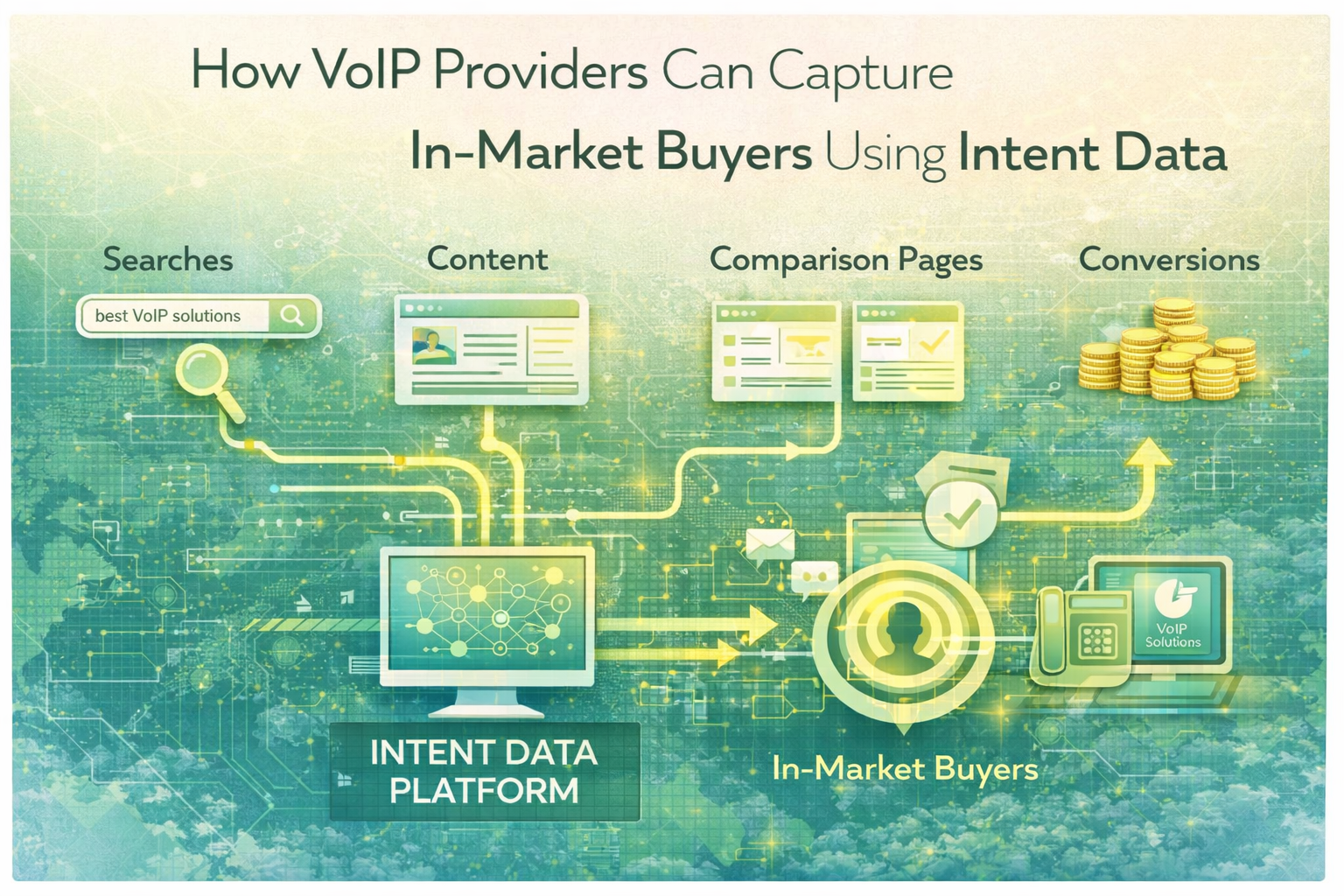
In the competitive VoIP landscape, reaching the right audience at the right time is the difference between wasted effort and predictable pipeline growth. While many companies focus on broad lead generation, the real opportunity lies in identifying in-market buyers actively searching for solutions.
Intent data has become a game-changer—enabling VoIP providers to pinpoint prospects who are already in the buying journey and engage them with precision.
What Are In-Market Buyers?
In-market buyers are organizations or decision-makers who are:
- Actively researching VoIP or cloud communication solutions
- Comparing vendors and features
- Evaluating pricing, scalability, and integrations
These buyers have already moved beyond awareness and are closer to making a purchase decision.
Capturing them at this stage significantly increases conversion rates and shortens sales cycles.
Why Intent Data Is Critical for VoIP Marketing
Intent data provides insights into online behavior that signals purchase intent.
This includes:
- Search queries related to VoIP solutions
- Engagement with industry content
- Visits to product comparison or pricing pages
Instead of targeting a broad audience, intent data allows VoIP providers to focus on accounts that are already showing buying signals.
1. Identify High-Intent Signals Across Channels
The first step is recognizing behaviors that indicate strong interest.
Key intent signals include:
- Searches like “best VoIP providers for enterprises”
- Reading comparison guides or reviews
- Downloading whitepapers on unified communications
- Frequent visits to VoIP-related content
Tracking these signals helps build a list of prospects who are actively evaluating solutions.
2. Prioritize Accounts Based on Intent Strength
Not all signals carry the same weight.
For example:
- A single blog visit → low intent
- Multiple visits to pricing and comparison pages → high intent
By scoring and prioritizing accounts based on engagement level, marketing and sales teams can focus on prospects most likely to convert.
3. Align Messaging with Buyer Intent
Once in-market buyers are identified, messaging must match their stage in the journey.
For high-intent prospects:
- Highlight product differentiation
- Showcase case studies and success metrics
- Provide clear pricing and ROI insights
Avoid generic messaging—focus on decision-stage content that supports evaluation.
4. Use Multi-Channel Engagement to Stay Visible
In-market buyers interact with multiple platforms before making a decision.
A multi-channel strategy ensures consistent engagement:
- Search and SEO content for discovery
- LinkedIn campaigns for targeted visibility
- Email outreach for personalized communication
- Retargeting ads to reinforce messaging
This approach keeps your brand top-of-mind during the evaluation phase.
5. Enable Faster Sales Follow-Ups
Timing is critical when engaging in-market buyers.
When intent signals are detected:
- Immediate outreach increases conversion chances
- Communication should be relevant and contextual
- Follow-ups should reference the prospect’s activity or interest
Quick and informed engagement creates a strong competitive advantage.
6. Deliver High-Value Content for Decision-Making
At this stage, buyers are looking for clarity and confidence.
Provide content that supports decision-making:
- Product comparison guides
- Technical documentation
- Case studies with measurable outcomes
- ROI calculators
This helps prospects justify their decision internally and move forward faster.
7. Integrate Intent Data with CRM and Lead Scoring
To maximize impact, intent data should be integrated with your existing systems.
This enables:
- Better lead scoring models
- Improved prioritization of accounts
- Seamless alignment between marketing and sales
With a unified view of prospect activity, teams can act more strategically.
8. Measure Impact on Pipeline and Conversions
The success of intent-driven strategies should be evaluated using meaningful metrics:
- Conversion rate of high-intent leads
- Sales cycle length
- Pipeline contribution from intent-based campaigns
- Deal win rates
These insights help refine targeting and improve campaign performance over time.
Conclusion
Capturing in-market buyers is no longer about guesswork—it’s about leveraging data to identify and engage prospects at the exact moment they are ready to act.
For VoIP providers, intent data offers a powerful way to:
- Focus on high-value opportunities
- Deliver relevant, timely messaging
- Accelerate pipeline and conversions
In a crowded market, those who act on intent signals effectively will gain a clear competitive edge.