

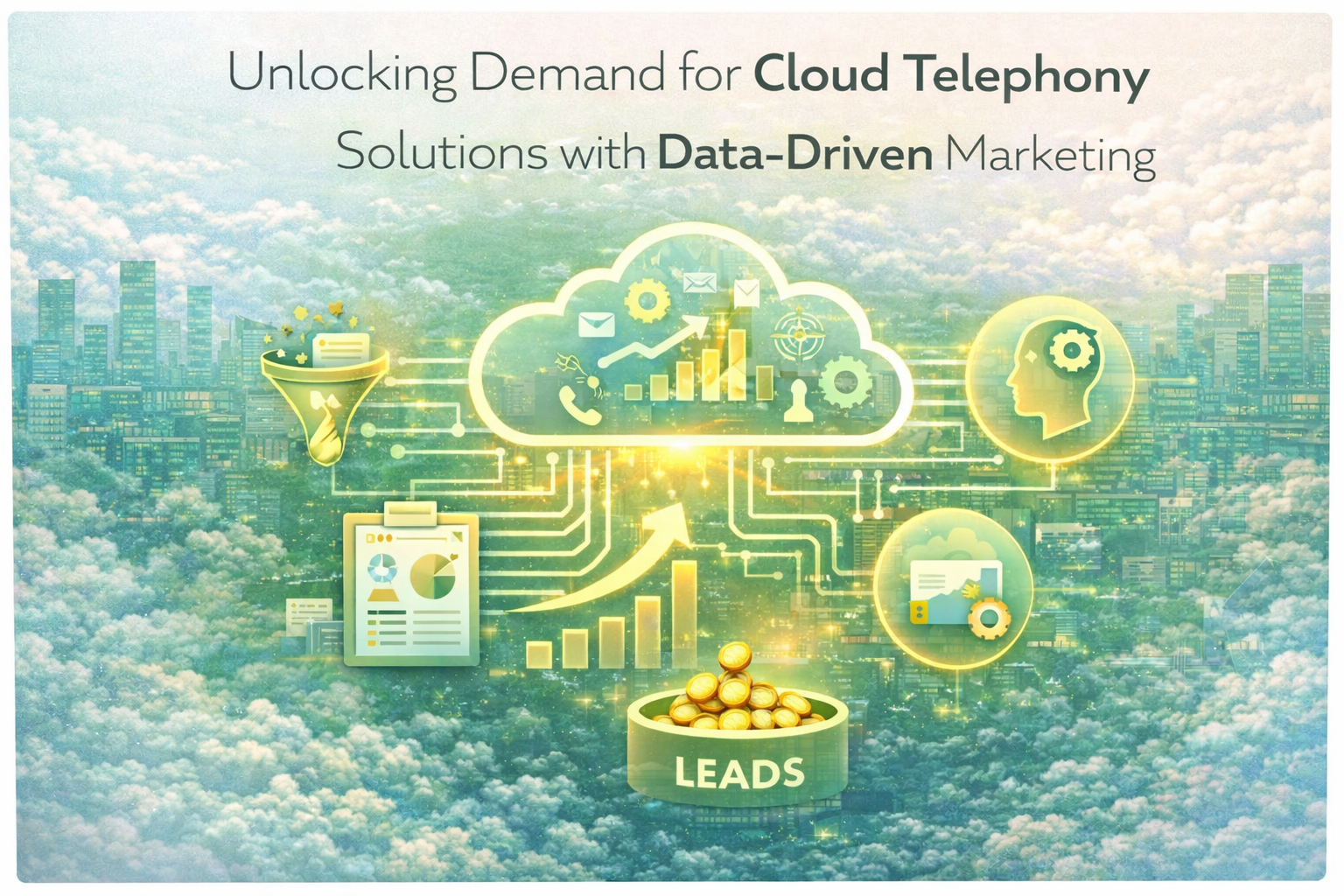
As businesses continue to modernize their communication infrastructure, cloud telephony has emerged as a critical enabler of scalability, flexibility, and cost efficiency. However, increasing competition in the VoIP and SaaS space has made it harder to stand out and generate consistent demand.
To succeed, companies must move beyond traditional marketing approaches and adopt data-driven strategies that identify, engage, and convert high-intent buyers.
This blog explores how data-driven marketing can help unlock demand for cloud telephony solutions and drive sustainable pipeline growth.
Why Data-Driven Marketing Matters in Cloud Telephony
Modern B2B buyers are informed, selective, and digitally active. They engage with multiple touchpoints before making a decision.
Data-driven marketing enables businesses to:
- Identify high-intent prospects
- Personalize messaging based on behavior
- Optimize campaigns in real time
- Improve lead quality and conversion rates
Instead of relying on assumptions, decisions are backed by actionable insights.
1. Leverage Intent Data to Capture Active Demand
Intent data helps identify organizations actively researching cloud telephony solutions.
Key signals include:
- Searches like “cloud telephony providers” or “business VoIP solutions”
- Engagement with comparison pages or product reviews
- Content consumption around unified communications and remote collaboration
By analyzing these signals, marketers can prioritize accounts that are already in the buying cycle, significantly improving conversion potential.
2. Use First-Party Data to Understand Audience Behavior
First-party data—collected from your own channels—provides valuable insights into user behavior.
This includes:
- Website visits and page engagement
- Content downloads
- Demo requests and interactions
Analyzing this data helps answer key questions:
- Which content drives the most engagement?
- Where do prospects drop off in the funnel?
- What topics resonate with decision-makers?
These insights allow for continuous optimization of campaigns and messaging.
3. Segment and Personalize Campaigns for Better Engagement
Not all prospects have the same needs. Data allows you to segment audiences based on:
- Industry
- Company size
- Job role
- Stage in the buying journey
Personalized campaigns can then deliver:
- Relevant content
- Industry-specific messaging
- Tailored value propositions
This level of relevance increases engagement and improves lead quality.
4. Optimize SEO Strategy Using Search Data
Search data reveals exactly what potential buyers are looking for.
By targeting high-intent keywords such as:
- “best cloud telephony solutions for enterprises”
- “VoIP systems for remote teams”
- “cloud phone system pricing”
—you can attract prospects actively evaluating solutions.
Content strategies that work:
- In-depth blogs addressing pain points
- Comparison guides
- Use-case-driven content
- Technical resources
SEO-driven traffic often brings in the most qualified leads.
5. Use Multi-Channel Data for Unified Campaign Execution
Data from multiple channels should work together, not in silos.
Combine insights from:
- Search and website analytics
- LinkedIn and paid campaigns
- Email engagement
- Content syndication platforms
This unified view helps:
- Identify top-performing channels
- Allocate budget effectively
- Maintain consistent messaging across touchpoints
6. Implement Predictive Analytics for Better Targeting
Predictive analytics uses historical data to forecast future behavior.
In cloud telephony marketing, this can help:
- Identify accounts likely to convert
- Prioritize high-value prospects
- Improve lead scoring models
This ensures sales teams focus on opportunities with the highest potential.
7. Enhance Lead Nurturing with Behavioral Insights
Data-driven nurturing ensures that prospects receive the right message at the right time.
For example:
- If a prospect downloads a migration guide → send follow-up content on implementation
- If they visit pricing pages → offer a demo or consultation
Behavior-based nurturing improves engagement and accelerates the decision-making process.
8. Measure, Analyze, and Continuously Optimize
The biggest advantage of data-driven marketing is the ability to measure everything.
Key metrics to track:
- Cost per qualified lead (CPL)
- Conversion rates across channels
- Engagement levels
- Pipeline contribution
Regular analysis helps refine strategies and improve ROI over time.
Conclusion
Unlocking demand for cloud telephony solutions requires more than broad marketing efforts. It demands a strategic, data-driven approach that focuses on intent, behavior, and personalization.
By leveraging intent data, optimizing content, and aligning campaigns across channels, businesses can attract high-quality prospects and convert them more effectively.
In a competitive market, data is the key to turning interest into actionable demand and measurable growth.