


As businesses increasingly move toward digital transformation, traditional communication systems are rapidly becoming obsolete. However, not every company upgrades at the same time.
For VoIP providers, the real opportunity lies in identifying and targeting businesses that are actively ready to upgrade their communication infrastructure.
This is where strategic lead generation plays a critical role—helping VoIP companies connect with high-intent prospects at the right moment in their buying journey.
The Shift from Traditional to Cloud-Based Communication
Organizations are moving away from legacy systems like PBX due to:
- High maintenance costs
- Limited scalability
- Lack of support for remote and hybrid work
Modern VoIP solutions offer:
- Flexibility and scalability
- Cost efficiency
- Advanced features like call analytics, integrations, and automation
But despite these advantages, timing is everything—companies upgrade only when the need becomes urgent.
Why Targeting “Upgrade-Ready” Businesses Matters
Not all prospects are equal. Businesses ready to upgrade typically:
- Are experiencing communication inefficiencies
- Have outgrown their current systems
- Are actively researching alternatives
- Have allocated budgets
Focusing on these accounts leads to:
- Higher conversion rates
- Shorter sales cycles
- Better ROI on marketing efforts
1. Identify Buying Signals Through Intent Data
Intent data helps uncover companies actively researching communication upgrades.
Key signals include:
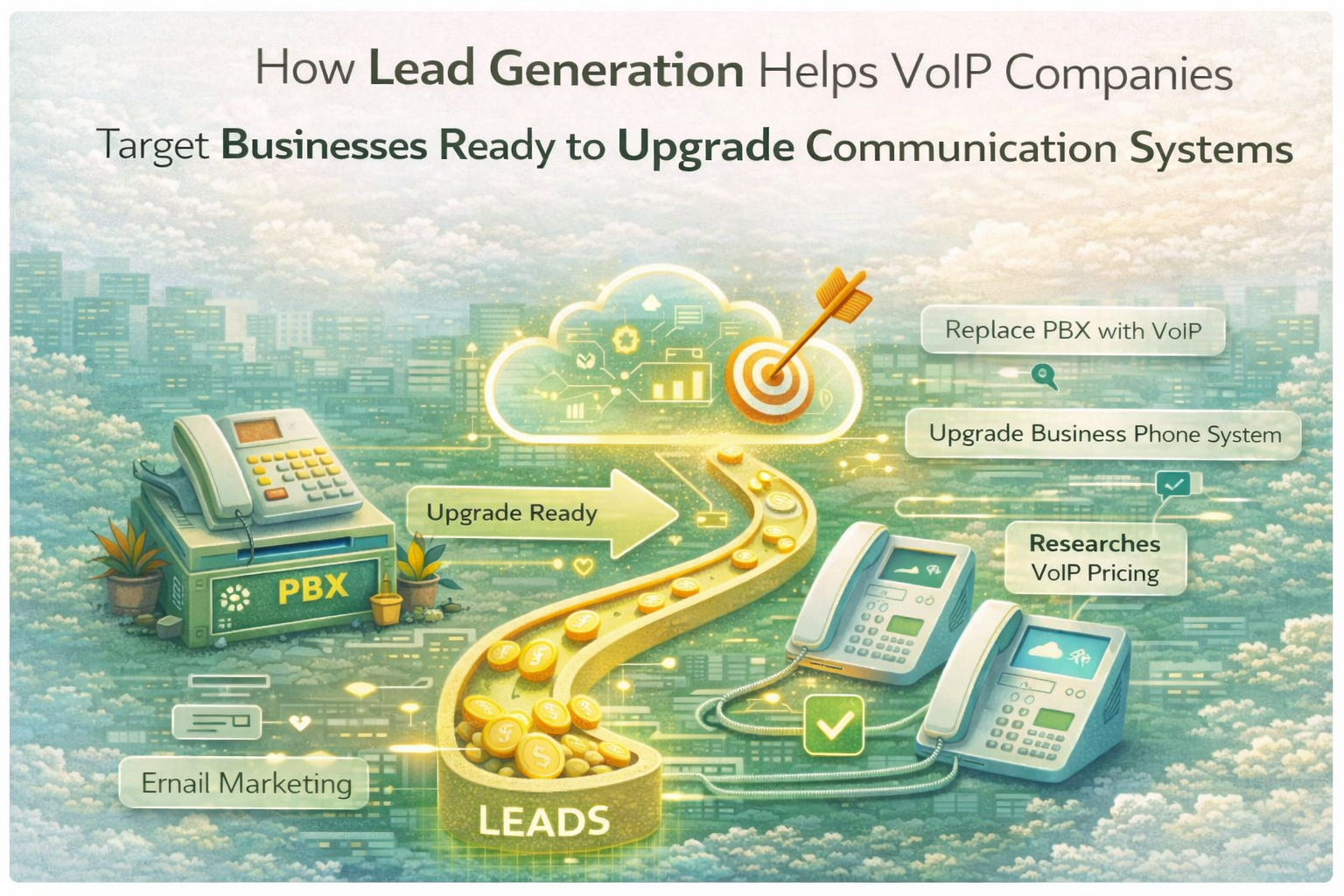
- Searches like “replace PBX with VoIP” or “upgrade business phone system”
- Engagement with content around cloud telephony or unified communications
- Visits to pricing or comparison pages
By tracking these behaviors, VoIP providers can prioritize prospects who are already in the consideration phase.
2. Use Targeted Content to Capture Demand
Businesses planning upgrades often seek clarity before making decisions.
Creating content that addresses upgrade scenarios can attract high-intent leads:
- “Signs your business needs to switch to VoIP”
- “Cost comparison: traditional phone systems vs VoIP”
- “How to migrate from PBX to cloud telephony”
Effective content formats:
- Blogs and guides
- Migration checklists
- Case studies showcasing successful transitions
- ROI-focused whitepapers
This positions your brand as a solution provider rather than just a vendor.
3. Leverage Lead Generation Campaigns for Precision Targeting
Lead generation campaigns enable VoIP companies to reach specific business segments that are more likely to upgrade.
Targeting can be refined based on:
- Industry (e.g., healthcare, BFSI, IT services)
- Company size
- Technology usage (legacy systems vs cloud adoption)
- Job roles (IT leaders, operations heads)
This ensures marketing efforts are focused on accounts with real potential.
4. Engage Prospects Across Multiple Touchpoints
Upgrade decisions involve multiple stakeholders and interactions.
A multi-touch approach helps maintain engagement:
- Search and content marketing for discovery
- LinkedIn campaigns for targeted visibility
- Email nurturing for education and follow-ups
- Retargeting to re-engage interested prospects
Consistent messaging across channels builds familiarity and trust.
5. Address Common Upgrade Concerns Early
Many businesses delay upgrading due to concerns such as:
- Migration complexity
- Downtime risks
- Integration challenges
- Cost implications
Your messaging should proactively address these:
- Provide migration roadmaps
- Highlight ease of integration
- Showcase uptime guarantees
- Offer cost-benefit analyses
Reducing perceived risk accelerates decision-making.
6. Optimize Conversion Paths for Decision-Makers
Once interest is generated, the next step is conversion.
Ensure your landing pages and CTAs are aligned with buyer intent:
- “Schedule a Free Consultation”
- “Download Migration Guide”
- “Request a Demo”
Include:
- Technical documentation
- Customer success stories
- Clear value propositions
IT decision-makers prefer detailed, transparent information before engaging.
7. Nurture Leads Until They Are Ready to Buy
Even high-intent prospects may take time to convert.
Lead nurturing strategies should:
- Provide continuous value through educational content
- Share relevant use cases and success stories
- Guide prospects through evaluation and decision stages
Well-structured nurturing ensures you stay top-of-mind when the upgrade decision is finalized.
8. Measure and Refine Lead Quality
To maximize impact, focus on metrics that reflect true business outcomes:
- Lead-to-opportunity conversion rate
- Cost per qualified lead
- Engagement levels across campaigns
- Pipeline contribution
Continuous optimization ensures better targeting and improved results over time.
Conclusion
Lead generation is not just about volume—it’s about identifying and engaging businesses that are ready to evolve their communication systems.
By leveraging intent data, targeted content, and multi-channel engagement, VoIP companies can connect with upgrade-ready prospects at the right time.
The result is a stronger pipeline, faster conversions, and more efficient growth in an increasingly competitive market.