

Introduction
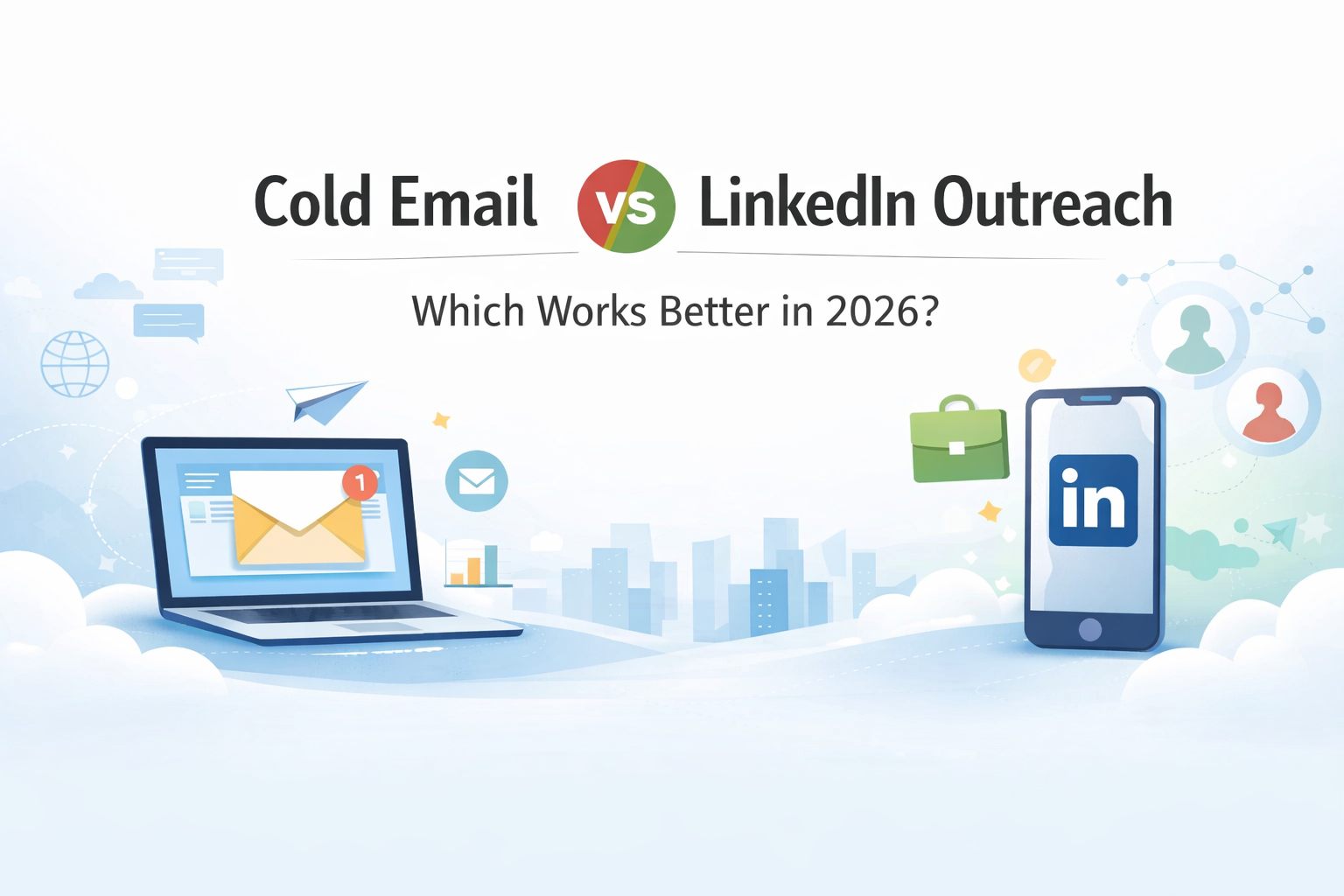
As B2B marketing continues to evolve, media houses are constantly evaluating the most effective channels to generate high-intent leads and drive engagement. Two of the most widely used outbound strategies—cold email and LinkedIn outreach—remain central to demand generation efforts.
However, in 2026, the landscape has shifted. Buyers are more informed, inboxes are more crowded, and personalization is no longer optional.
For B2B media houses, the key question is not just which channel works—but which approach delivers better results based on audience behavior, intent, and engagement patterns.
The Changing Nature of B2B Outreach
Modern B2B buyers expect:
- Personalized and relevant communication
- Value-driven engagement rather than direct selling
- Context aligned with their industry and challenges
This shift has redefined how cold email and LinkedIn outreach perform, especially for media houses targeting decision-makers across industries.
Cold Email in 2026: Still Relevant, but Evolving
Cold email continues to be a scalable outreach channel, particularly for reaching a large volume of prospects.
Key Strengths:
- Direct access to decision-makers’ inboxes
- High scalability for outbound campaigns
- Ability to structure detailed messaging
However, effectiveness now depends heavily on:
- Audience targeting accuracy
- Content relevance and personalization
- Timing and intent alignment
For media houses, cold email works best when supported by data-driven targeting and strong value positioning.
LinkedIn Outreach: Relationship-Driven Engagement
LinkedIn has become a core platform for B2B engagement, offering a more contextual and interactive environment.
Key Strengths:
- Access to verified professional profiles
- Real-time visibility into prospect activity and interests
- Strong foundation for relationship-building
For media houses, LinkedIn enables:
- Engagement with decision-makers in a professional setting
- Distribution of thought leadership content
- Continuous visibility among target audiences
This makes LinkedIn outreach particularly effective for building trust and long-term engagement.
Comparing Cold Email and LinkedIn Outreach
1. Reach and Scalability
- Cold Email offers broader reach and faster scalability
- LinkedIn provides more targeted and refined audience access
2. Engagement Quality
- Cold Email depends on message relevance and timing
- LinkedIn benefits from context and ongoing interaction
3. Trust and Credibility
- Cold Email requires strong messaging to establish credibility
- LinkedIn builds trust through profiles, content, and visibility
4. Conversion Potential
- Cold Email can drive quick responses when aligned with intent
- LinkedIn often leads to higher-quality conversations over time
For media houses, the choice is less about one replacing the other—and more about how each channel fits into a broader strategy.
The Role of Intent and Personalization
In 2026, both cold email and LinkedIn outreach are driven by:
- Intent signals indicating buyer readiness
- Personalized messaging aligned with industry needs
- Contextual engagement based on prospect behavior
Without these elements, even the most well-structured campaigns struggle to deliver results.
As a B2B media house, leveraging intent data allows for more precise targeting and higher engagement across both channels.
Building a Multi-Channel Outreach Strategy
Rather than choosing between cold email and LinkedIn, high-performing media houses integrate both into a multi-channel approach.
Strategic Advantages:
- Reinforced messaging across multiple touchpoints
- Increased visibility among target accounts
- Higher engagement through varied interaction channels
This approach ensures that prospects encounter your brand in different contexts, improving recall and response rates.
When to Use Each Channel
Cold Email is most effective for:
- Scaling outreach to large target lists
- Initiating conversations quickly
- Delivering structured, value-driven messaging
LinkedIn Outreach is most effective for:
- Building relationships with decision-makers
- Engaging through content and insights
- Nurturing prospects over longer cycles
For media houses, combining both ensures balanced outreach—scale with depth.
Measuring Effectiveness in 2026
To evaluate performance, media houses should focus on:
- Engagement rates across channels
- Quality of conversations generated
- Conversion rates from outreach efforts
- Pipeline contribution from each channel
The goal is not just activity—but measurable impact on lead generation and revenue growth.
Conclusion
In 2026, both cold email and LinkedIn outreach remain powerful tools for B2B media houses—but their effectiveness depends on how they are used together.
Cold email provides scale and direct access, while LinkedIn enables relationship-driven engagement and trust-building. When combined with intent data, personalization, and strategic execution, these channels can drive high-intent leads and meaningful conversations.
For media houses, the winning approach is not choosing one over the other—but creating a cohesive, multi-channel outreach strategy that aligns with modern buyer behavior.