

For many B2B companies, revenue growth often feels unpredictable. Some months bring a surge of deals, while others struggle with a lack of qualified opportunities. The key to sustainable growth lies in building a predictable B2B sales pipeline.
A well-structured pipeline ensures that your business consistently generates, nurtures, and converts prospects into customers. Instead of relying on random deals or short-term tactics, companies with predictable pipelines create repeatable and scalable revenue processes.
What Is a B2B Sales Pipeline?
A B2B sales pipeline is a structured process that tracks potential customers as they move through different stages of the buying journey — from initial awareness to closing a deal.
It helps sales teams visualize and manage opportunities while identifying where prospects are in the decision-making process.
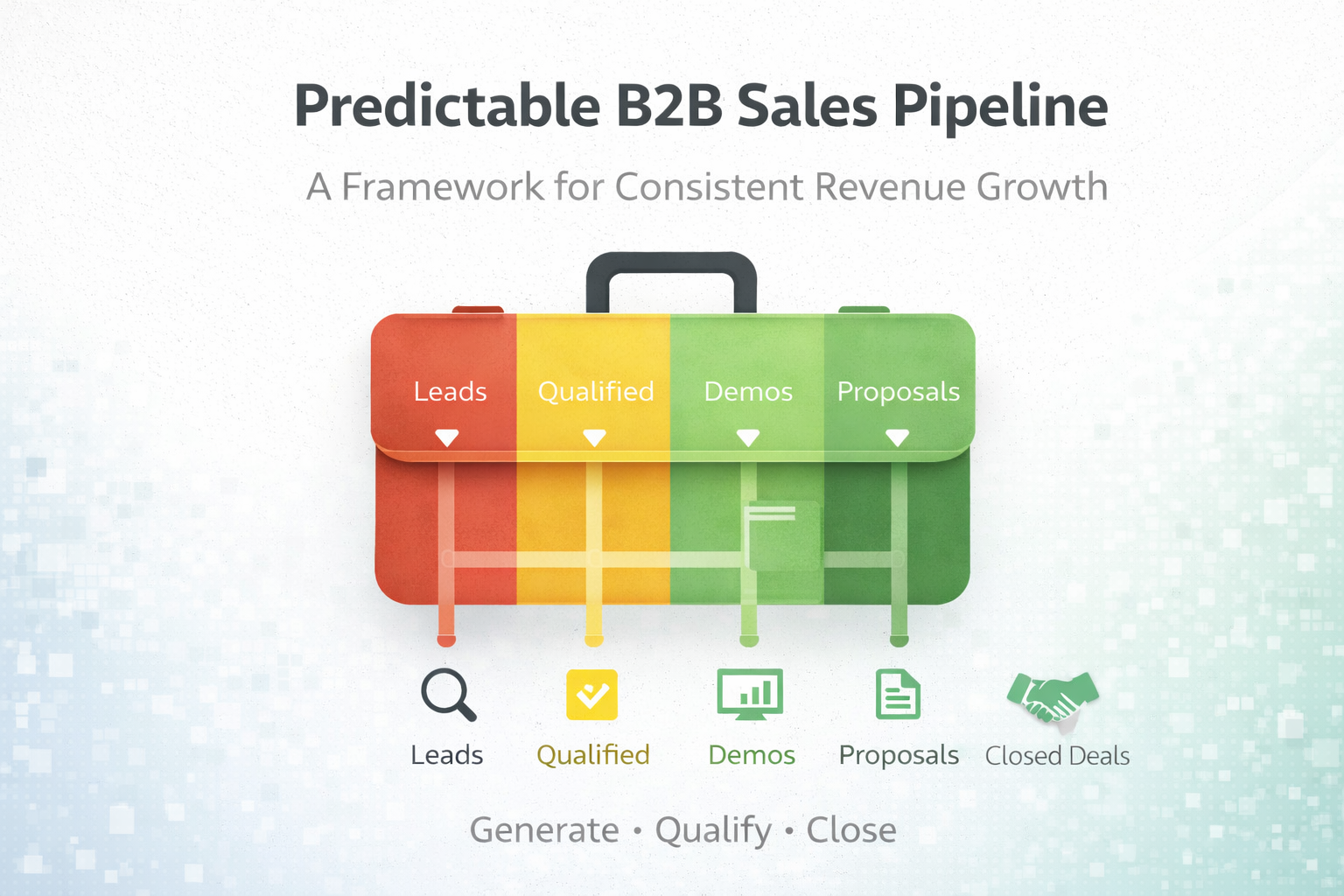
Typical stages of a B2B sales pipeline include:
- Lead generation
- Lead qualification
- Discovery and needs assessment
- Product demonstration or proposal
- Negotiation and closing
A clear pipeline allows teams to monitor progress, forecast revenue, and improve conversion rates.
Why a Predictable Sales Pipeline Matters
A predictable pipeline enables businesses to plan growth with confidence. Instead of reacting to fluctuating sales cycles, organizations can maintain consistent momentum.
Key benefits include:
- More accurate revenue forecasting
- Better resource planning
- Improved sales productivity
- Higher conversion rates
- Stronger alignment between marketing and sales teams
Ultimately, a predictable pipeline transforms sales from a reactive process into a strategic growth engine.
Key Steps to Build a Predictable B2B Sales Pipeline
1. Define Your Ideal Customer Profile (ICP)
The foundation of a strong pipeline starts with identifying the right customers. Your Ideal Customer Profile (ICP) defines the type of companies most likely to benefit from your solution.
Important factors may include:
- Industry
- Company size
- Revenue range
- Technology stack
- Business challenges
Focusing on the right accounts improves lead quality and conversion rates.
2. Implement a Strong Lead Generation Strategy
To maintain a healthy pipeline, businesses must consistently attract new prospects. Effective lead generation channels include:
- Content marketing and SEO
- LinkedIn outreach and social selling
- Email campaigns
- Webinars and industry events
- Paid advertising
A combination of inbound and outbound strategies ensures a steady flow of opportunities.
3. Qualify Leads Effectively
Not every lead will convert into a customer. Sales teams should use qualification frameworks such as BANT (Budget, Authority, Need, Timeline) or MEDDICC to determine which opportunities are worth pursuing.
Proper qualification helps prioritize high-value prospects and avoid wasting time on low-quality leads.
4. Align Marketing and Sales Teams
Successful pipelines require close collaboration between marketing and sales teams. Marketing generates awareness and nurtures leads, while sales focuses on converting qualified prospects.
Clear communication ensures that both teams work toward shared revenue goals.
5. Use CRM and Sales Automation Tools
Customer Relationship Management (CRM) systems help track interactions, manage deals, and monitor pipeline performance.
Automation tools can streamline tasks such as:
- Lead scoring
- Follow-up emails
- Meeting scheduling
- Pipeline reporting
This allows sales teams to focus more on building relationships and closing deals.
6. Track Metrics and Optimize Continuously
Data plays a crucial role in building a predictable pipeline. Key metrics to monitor include:
- Lead-to-opportunity conversion rate
- Opportunity-to-close rate
- Average deal size
- Sales cycle length
- Pipeline velocity
Analyzing these metrics helps identify bottlenecks and optimize the sales process.
Common Challenges in Building a Predictable Pipeline
Many organizations struggle with pipeline consistency due to:
- Poor lead quality
- Lack of sales and marketing alignment
- Inefficient follow-up processes
- Limited visibility into pipeline data
Addressing these challenges requires a structured strategy and continuous optimization.
The Role of Demand Generation in Pipeline Growth
Demand generation plays a critical role in building predictable pipelines. By consistently educating and engaging potential buyers, businesses create a steady flow of qualified prospects entering the pipeline.
Content marketing, webinars, thought leadership, and targeted campaigns all help generate sustained interest from potential customers.
Sales Pipeline Trends for 2026
As B2B sales evolve, several trends are shaping pipeline strategies:
AI-powered sales intelligence
AI tools help identify high-intent prospects and prioritize opportunities.
Account-Based Marketing (ABM)
Targeting specific high-value accounts improves conversion rates and deal sizes.
Data-driven decision-making
Sales teams are increasingly using analytics to optimize pipeline performance.
Automation and personalization
Automation tools enable personalized outreach at scale.
Who Should Focus on Building a Predictable Pipeline?
A predictable sales pipeline is essential for:
- B2B SaaS companies
- Technology service providers
- Consulting and professional services firms
- Companies with long or complex sales cycles
Any organization looking to achieve consistent revenue growth must invest in pipeline development.
Conclusion
Building a predictable B2B sales pipeline requires a combination of strategy, technology, and collaboration. By defining the right target audience, generating consistent demand, qualifying leads effectively, and leveraging data-driven insights, businesses can create a scalable and reliable sales engine.
Organizations that focus on pipeline predictability will gain a competitive advantage through consistent growth, improved forecasting, and stronger customer relationships.