


As B2B applications evolve, speed, scalability, and cost efficiency have become critical business priorities. Traditional infrastructure models struggle to keep up with dynamic workloads and growing customer expectations. This is why serverless computing is rapidly becoming the backbone of next-generation B2B applications.
Serverless architecture enables businesses to focus on innovation and growth — without worrying about infrastructure management.
What Is Serverless Computing?
Serverless computing is a cloud execution model where developers build and deploy applications without managing servers. Cloud providers automatically handle provisioning, scaling, and maintenance, allowing businesses to pay only for the resources they use.
Despite the name, servers still exist — they’re just fully managed behind the scenes. This shift frees B2B teams to prioritize product development, customer experience, and faster go-to-market strategies.
Why Serverless Computing Matters for B2B Businesses
B2B applications often face unpredictable traffic, complex integrations, and high availability requirements. Serverless computing provides the agility needed to handle these demands effortlessly.
Key advantages include:
- Automatic scaling during traffic spikes
- Faster application development cycles
- Reduced infrastructure and operational costs
- Improved reliability and performance
Serverless empowers B2B organizations to stay competitive in fast-changing markets.
Key Benefits of Serverless Computing for B2B Applications
1. Faster Time-to-Market
Serverless architecture removes infrastructure bottlenecks, enabling teams to deploy features and updates quickly. This speed helps businesses respond faster to market needs and customer feedback.
2. Cost Optimization at Scale
With a pay-as-you-go model, organizations only pay for actual usage. This makes serverless ideal for B2B applications with fluctuating workloads, reducing wasted infrastructure spend.
3. Seamless Scalability
Serverless platforms automatically scale based on demand, ensuring consistent performance during peak usage — without manual intervention.
4. Improved Application Reliability
Built-in fault tolerance and high availability help B2B applications maintain uptime, even during sudden traffic surges or system failures.
5. Enhanced Developer Productivity
By eliminating server management tasks, development teams can focus on building high-value features instead of maintaining infrastructure.
How Serverless Is Powering Next-Gen B2B Applications
API-Driven Architectures
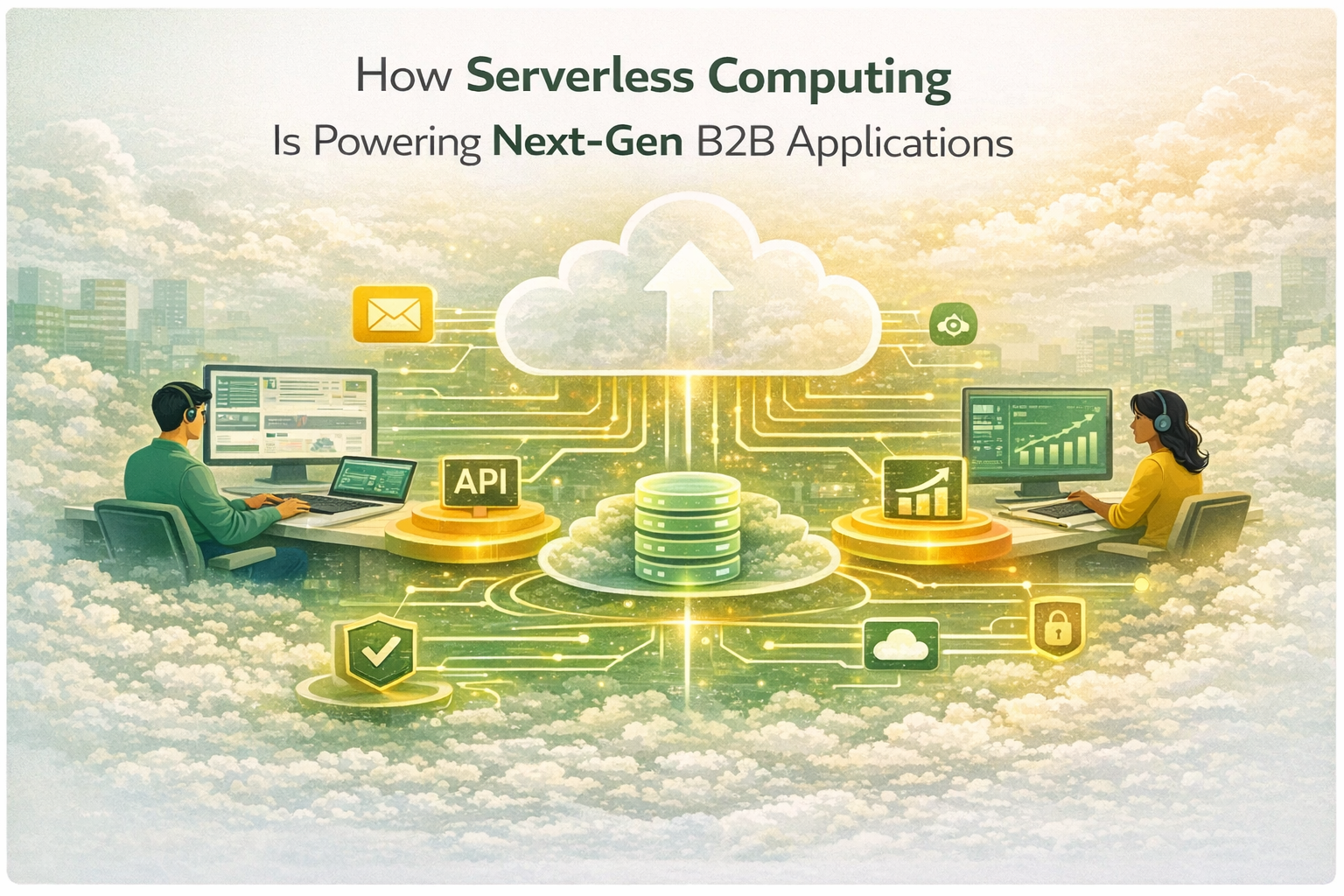
Serverless functions are ideal for building scalable APIs that integrate CRMs, ERPs, payment gateways, and third-party tools.
Event-Driven Workflows
Serverless computing excels at handling real-time events such as data processing, notifications, and automation workflows.
Data Processing and Analytics
B2B applications use serverless to process large datasets efficiently, enabling faster insights and real-time reporting.
SaaS Platforms and Microservices
Serverless supports modular microservices architectures, making B2B SaaS platforms more flexible, scalable, and resilient.
Security and Compliance in Serverless Environments
Modern serverless platforms include built-in security features such as:
- Automatic patching and updates
- Identity and access management (IAM)
- Encryption of data in transit and at rest
This helps B2B organizations meet compliance requirements while reducing security risks.
Serverless Computing and Digital Transformation
Serverless computing plays a key role in digital transformation strategies, enabling businesses to:
- Innovate faster
- Scale globally with minimal overhead
- Reduce operational complexity
- Improve customer experience
As enterprises modernize their tech stacks, serverless is becoming a strategic enabler for growth.
Who Should Adopt Serverless Computing?
Serverless is ideal for:
- B2B SaaS companies
- Cloud-native startups
- Enterprises modernizing legacy systems
- Businesses with variable workloads
Any organization looking to build scalable, cost-efficient, and future-ready B2B applications can benefit.
The Future of B2B Applications Is Serverless
As cloud technologies continue to advance, serverless computing will become a standard approach for building modern B2B applications. Organizations that embrace serverless early gain greater agility, reduced costs, and a strong competitive edge.
Conclusion
Serverless computing is transforming how B2B applications are built, scaled, and delivered. By removing infrastructure complexity and enabling on-demand scalability, serverless empowers businesses to innovate faster and operate more efficiently.
For organizations aiming to build next-generation B2B applications, serverless computing isn’t just an option — it’s a strategic advantage.