


In the competitive world of B2B marketing, generating leads is only half the battle. The real challenge lies in attracting high-quality leads — prospects who are genuinely interested in your solution and have the potential to become long-term customers.
Many businesses struggle with large volumes of unqualified leads that rarely convert into revenue. To achieve sustainable growth, organizations must focus on strategies that bring in qualified prospects who match their ideal customer profile.
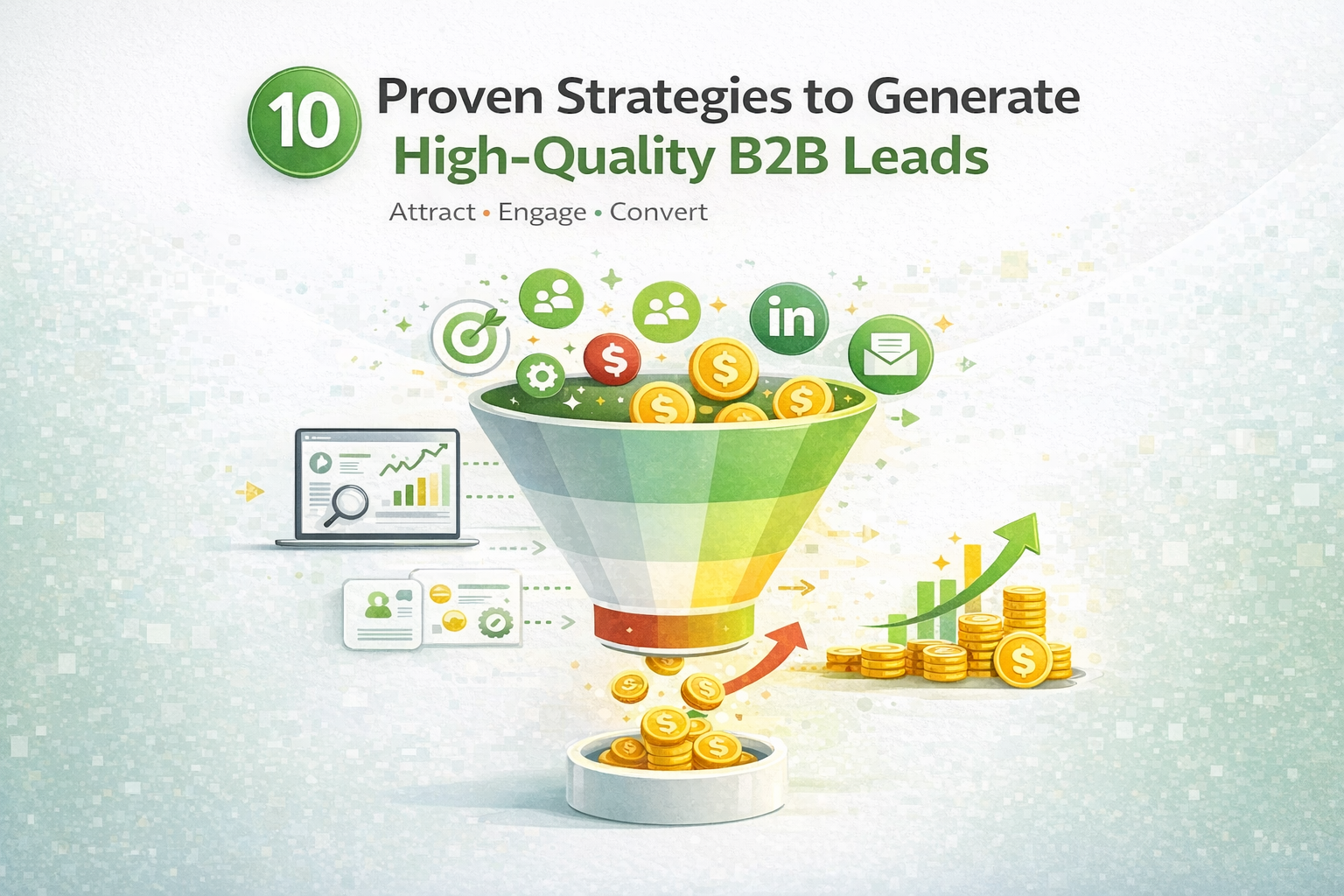
In this guide, we’ll explore 10 proven strategies to generate high-quality B2B leads and build a strong sales pipeline.
What Are High-Quality B2B Leads?
High-quality B2B leads are prospects who:
- Match your Ideal Customer Profile (ICP)
- Have a clear business need for your solution
- Possess decision-making authority or influence
- Have the budget and timeline to purchase
These leads are far more likely to convert into paying customers compared to generic or unqualified contacts.
Why High-Quality Leads Matter
Focusing on quality rather than quantity delivers several key advantages:
- Higher conversion rates
- Shorter sales cycles
- Better alignment between marketing and sales
- Increased return on marketing investment
- Stronger long-term customer relationships
When businesses prioritize quality leads, sales teams spend more time closing deals and less time chasing unqualified prospects.
1. Define Your Ideal Customer Profile (ICP)
The foundation of high-quality lead generation starts with clearly defining your Ideal Customer Profile. This includes identifying the characteristics of companies that benefit most from your product or service.
Common ICP factors include:
- Industry and market segment
- Company size and revenue
- Technology stack
- Business challenges and goals
A well-defined ICP ensures marketing efforts target the right audience.
2. Invest in Content Marketing
Content marketing is one of the most effective ways to attract qualified B2B prospects. By publishing valuable and educational content, businesses position themselves as trusted industry experts.
Effective content formats include:
- Blog articles
- Whitepapers and reports
- Case studies
- Guides and eBooks
- Industry insights
High-quality content helps build trust and attract prospects actively searching for solutions.
3. Optimize for Search Engines (SEO)
Search Engine Optimization ensures your business appears when potential buyers search for relevant solutions online.
SEO strategies include:
- Keyword-optimized blog content
- Technical website optimization
- High-quality backlinks
- On-page SEO improvements
Organic search traffic often brings highly qualified prospects who are already researching solutions.
4. Leverage LinkedIn for B2B Prospecting
LinkedIn is one of the most powerful platforms for B2B lead generation. Businesses can connect directly with decision-makers, build relationships, and share valuable content.
Successful LinkedIn strategies include:
- Targeted connection requests
- Personalized outreach messages
- Thought leadership content
- LinkedIn advertising campaigns
These approaches help businesses reach professionals actively engaged in their industry.
5. Implement Account-Based Marketing (ABM)
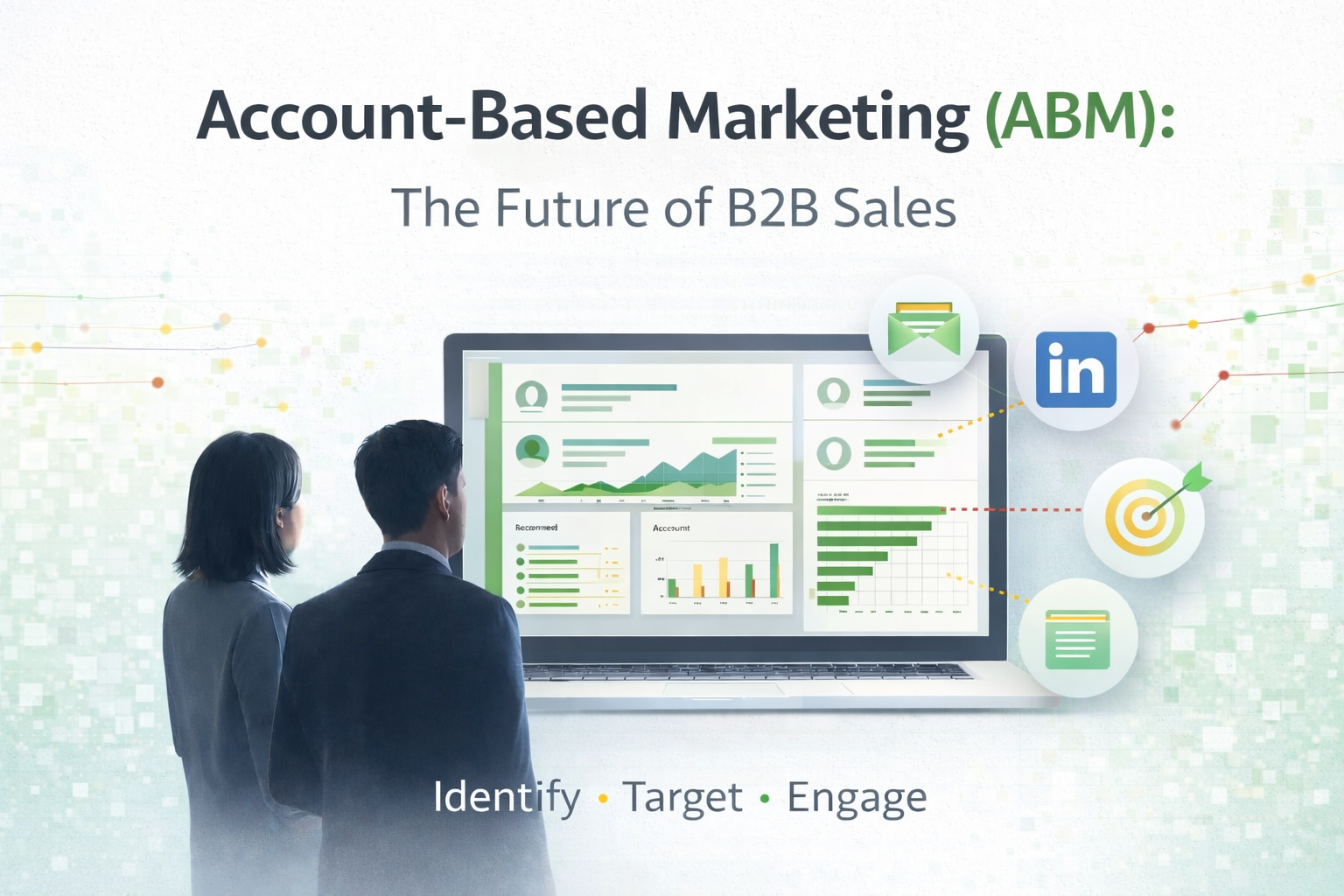
Account-Based Marketing focuses on targeting specific high-value companies instead of broad audiences.
With ABM, marketing and sales teams collaborate to create personalized campaigns tailored to individual accounts. This approach often results in:
- Higher conversion rates
- Larger deal sizes
- Stronger customer relationships
ABM is particularly effective for companies selling high-value B2B solutions.
6. Use Marketing Automation for Lead Nurturing
Not all prospects are ready to buy immediately. Marketing automation tools help nurture leads through personalized email campaigns and targeted content.
Automated nurturing helps:
- Educate prospects over time
- Maintain engagement
- Move leads closer to purchase decisions
This ensures leads remain warm until they are ready for sales outreach.
7. Host Webinars and Virtual Events
Webinars and virtual events provide a powerful way to engage with potential customers in real time. These events allow businesses to showcase expertise, demonstrate products, and interact directly with prospects.
Benefits include:
- Higher engagement levels
- Opportunity to answer questions live
- Stronger trust and credibility
Attendees are often highly interested prospects.
8. Use Intent Data to Identify Ready-to-Buy Prospects
Intent data helps businesses identify companies actively researching solutions related to their products or services.
By analyzing online behavior and search activity, marketers can prioritize prospects showing strong buying signals.
This allows sales teams to focus on leads with the highest likelihood of conversion.
9. Align Sales and Marketing Teams
Successful lead generation requires strong collaboration between marketing and sales.
Marketing teams generate awareness and attract prospects, while sales teams convert them into customers. Clear communication ensures that both teams focus on shared revenue goals.
Alignment improves lead quality and increases conversion rates.
10. Measure and Optimize Your Lead Generation Efforts
Continuous improvement is essential for successful lead generation. Businesses should track key performance metrics such as:
- Lead conversion rates
- Cost per lead
- Pipeline contribution
- Sales cycle length
- Marketing ROI
Analyzing these metrics helps identify which strategies generate the highest-quality leads.
B2B Lead Generation Trends for 2026
As technology evolves, several trends are shaping the future of B2B lead generation:
AI-powered lead scoring
Artificial intelligence helps identify the most promising prospects.
Personalized marketing experiences
Businesses are delivering highly targeted content tailored to individual buyers.
Video and interactive content
Engaging formats are driving higher engagement and conversions.
Intent-driven targeting
Marketers are increasingly focusing on prospects actively researching solutions.
Conclusion
Generating high-quality B2B leads requires a strategic approach that combines targeted marketing, valuable content, data-driven insights, and strong sales alignment.
By focusing on attracting the right prospects rather than simply increasing lead volume, businesses can build stronger pipelines and drive sustainable revenue growth.
Organizations that implement these proven strategies will be better positioned to generate consistent, high-quality leads and long-term business success.